NC State lab makes lead perovskite film with 0.04 W/(m·K) conductivity and 7.7 GPa stiffness
A spin-cast perovskite film conducts heat at about 0.04 W/(m·K) yet has a 7.7 GPa modulus, above most plastics, foams and aerogels. It is still a lab sample.
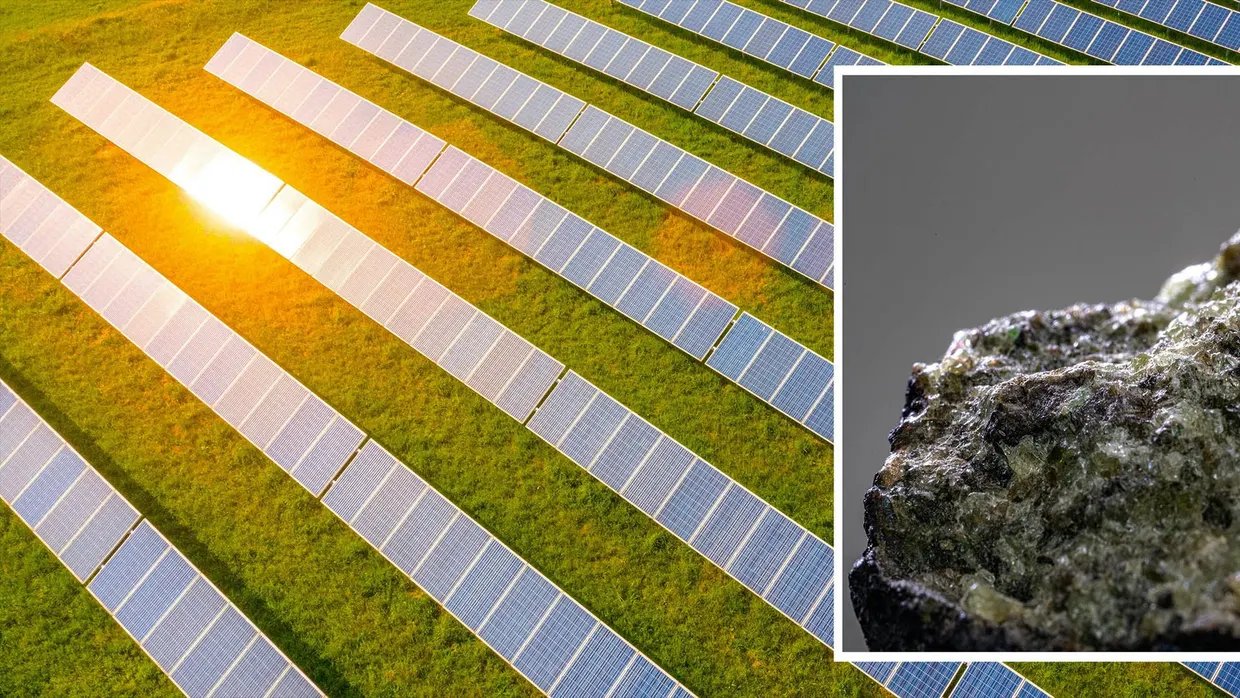
Researchers led by Jun Liu at North Carolina State University, with Dali Sun, chemists at the University of North Carolina at Chapel Hill and colleagues in China, made a dense layered perovskite film with thermal conductivity down to about 0.04 W/(m·K) at room temperature, according to a paper in Science Advances. science.org
Science Advancesscience.orgOpen source ↗ The film, azobenzene ethyl ammonium lead iodide, has an elastic modulus of 7.7 GPa, higher than most plastics, foams and aerogels. So far it exists only as a laboratory thin film on silicon wafers, far thinner than a human hair.
Stiff and insulating at once
Foams and aerogels insulate because they are mostly air, but that makes them soft. In most materials, stiffness and heat conduction rise together. The authors report that this film combines very low conductivity with rigidity, and attribute it to specially engineered organic cations in the layered structure.
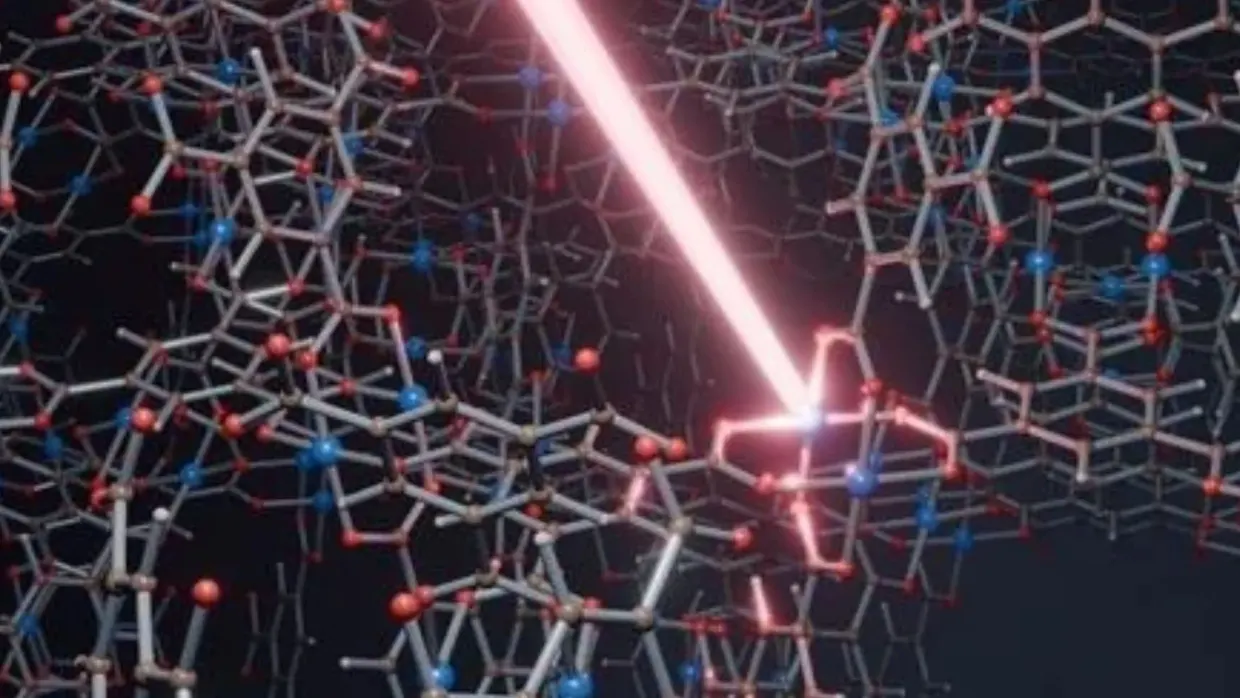
The material belongs to layered hybrid organic-inorganic perovskites: sheets of lead and iodine between layers of organic molecules. The cations here carry two rings joined by a double bond. According to the team, the rings make the layer rigid and vibrate mostly at high frequencies that barely overlap with the vibrations of the lead-iodide sheets, so heat crosses between layers with difficulty. The longer molecules also disorder the stacking of the sheets, which slows heat further.
Measurements and limits
The team compared four versions with different organic molecules. The one with a plain carbon chain carried about five times more heat than the azobenzene version. For the thermal measurements, each film was coated with a thin layer of metal; a short laser pulse heated the surface, and a second beam tracked how fast the heat drained into the film. The best results came from films about 150 nm thick, while thinner and thicker ones did worse. Stiffness was measured by pressing a tiny vibrating probe against the film.
The films are made by spin-casting a liquid and then heating it. The authors wrote that the method can be adapted to coat large or flexible surfaces. Liu named electronics and spacecraft as the first applications, as a thin coating for near-room-temperature insulation. None of the proposed uses has been tested.
The film contains lead. Liu said environmental considerations would be needed if this exact composition were used, and pointed to related lead-free crystals as the route to practical use. Whether they keep the same effect has not been shown. A similar molecule, with the rings joined by carbon atoms instead of nitrogen, disordered the layers less and did not reach the record. The team's model explains that gap only loosely and cannot yet predict which molecule will work.