Astronomers Detect Dwarf Planet Candidate 2026 ED138 with Rubin Observatory
Data from the Vera C. Rubin Observatory revealed an icy body that could become the solar system's sixth recognized dwarf planet.
Astronomers using the Simonyi Survey Telescope at the NSF-DOE Vera C. Rubin Observatory have identified a massive trans-Neptunian object provisionally designated 2026 ED138, SciTechDaily reported. The candidate was initially detected by Matthew Holman of the Harvard & Smithsonian Center for Astrophysics and presented alongside Mario Jurić on October 27, 2026 scitechdaily.com
SciTechDailyscitechdaily.comOpen source ↗. Early measurements place the object at approximately 46 astronomical units from the Sun, which is further than Pluto's average orbital distance of 40 astronomical units. If officially confirmed by the International Astronomical Union, it will become the sixth recognized dwarf planet, joining Pluto, Ceres, Eris, Haumea, and Makemake.
Estimated Dimensions and Physical Properties
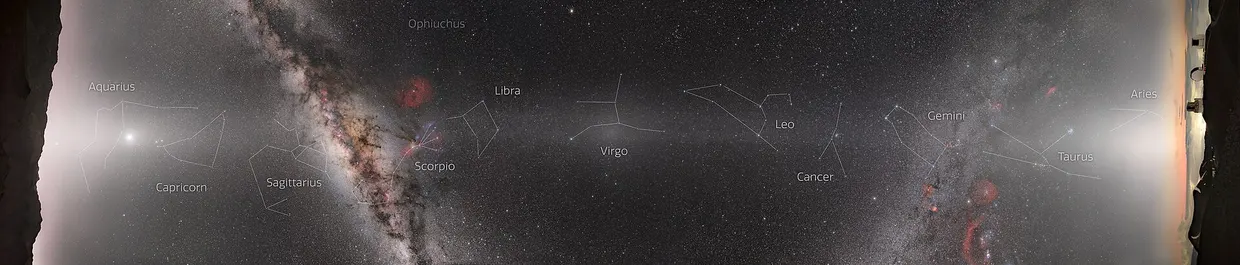
Based on distance, brightness, and surface reflectivity estimates, researchers approximate the diameter of 2026 ED138 to be between 600 and 1,500 kilometers. An icy body within this size range possesses sufficient gravitational mass to achieve hydrostatic equilibrium and form a spherical shape, fulfilling a key condition for dwarf planet classification. According to the team, this represents the largest trans-Neptunian object identified in approximately two decades. The object had previously escaped detection due to visual interference from millions of Milky Way stars lining the stellar plane.
Algorithmic Recovery and Orbital Tracking
Holman isolated the object on October 13 while testing automated search algorithms developed with Kevin Napier to cross-match moving signals across vast data streams. Jurić subsequently located 20 earlier detections in Rubin catalogs extending back to March 2026, as well as observations in independent survey archives dating to 2016. These combined precovery records provided a decade of baseline trajectory data to determine the body's orbit. The observation was made during the observatory's commissioning phase, preceding the broader Legacy Survey of Space and Time project.