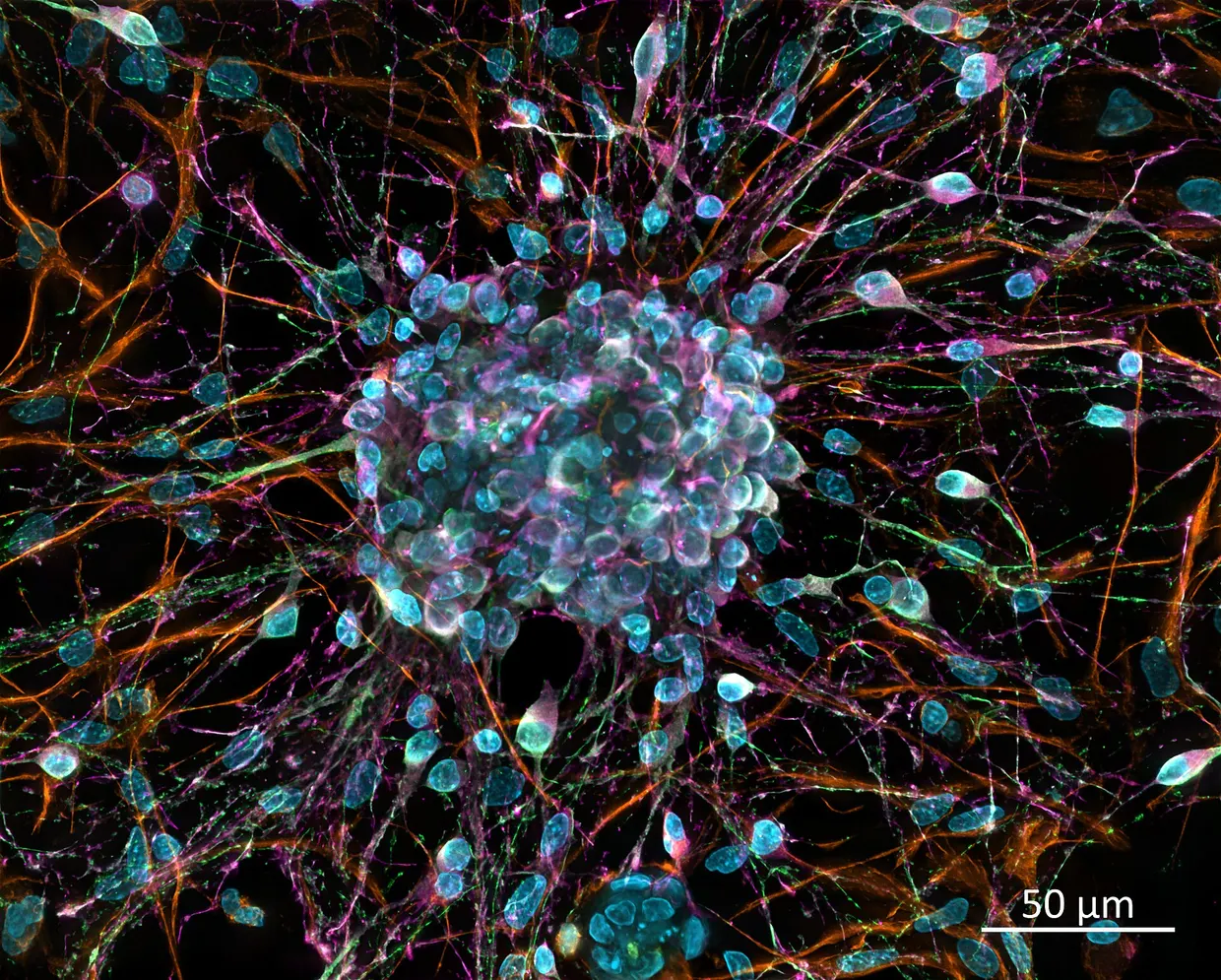
Mouse study: nucleus of the lateral olfactory tract is required for learning odor aversion
Chemogenetic perturbation of the NLOT in mice disrupted learned aversion to an odor paired with malaise, but not odor discrimination or fear learning to a sound.

A group led by Dan Rokni at the Hebrew University of Jerusalem reported in the Journal of Neuroscience that the nucleus of the lateral olfactory tract (NLOT) is required for conditioned odor aversion in mice doi.org
Journal of Neurosciencedoi.orgOpen source ↗. The NLOT has direct two-way connections with olfactory regions and with the basolateral amygdala. Using targeted chemogenetic perturbations, the authors tested what this region contributes when an animal learns that an odor predicts sickness.
Why odor aversion is hard to study
Foraging animals must continually judge whether a potential food is safe. These decisions rely on innate preferences and on associations learned from experience. If eating a food is followed by malaise, the animal later avoids it, linking the sensory cues of that food to its negative consequences.
This learning has mostly been studied with taste. Taste signals, however, arise only after oral contact, when exposure to a potential toxin has already occurred. Odors carry information about food before it is consumed, but how an odor acquires aversive value has remained unclear.
What the NLOT experiments showed
In the experiments, mice drank water in the presence of an odor and then received an injection of lithium chloride, which causes malaise. The researchers controlled the activity of NLOT neurons while the animals learned the association. Both activating and suppressing these neurons made it harder to form the link between the odor and the unpleasant experience. According to the authors, the perturbations disrupted both the acquisition and the expression of odor-malaise associations doi.org
Journal of Neurosciencedoi.orgOpen source ↗.
The effect was selective. Manipulating the NLOT did not impair odor detection or odor discrimination. It also did not affect fear conditioning driven by a non-olfactory cue: in that test, a sound was paired with an electric shock.
The authors describe the NLOT, a largely unstudied region at the interface of olfactory and limbic circuits, as a selective node for linking odor cues to learned aversive outcomes. The results come from mice, and the team notes that fuller conclusions require further research. They hope the work will support future studies of the molecular mechanisms that shape odor-guided behavior.