Plasmodium falciparum PfMD3 protein regulates translation; knockout lowers mosquito infectivity
Authors report that the RNA-binding protein PfMD3 supports translation of transcripts needed for male gametes; parasites lacking it infect mosquitoes less.
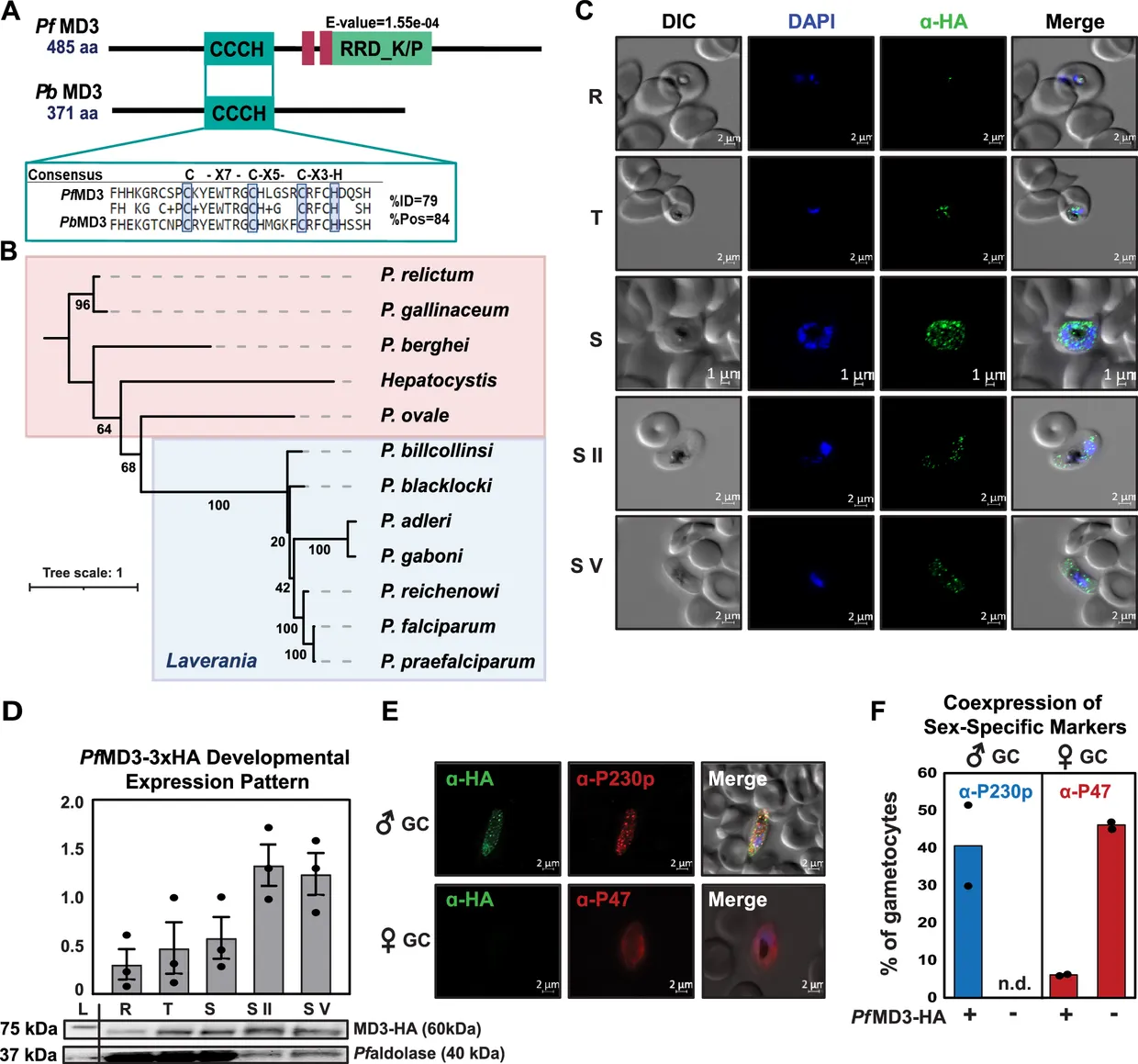
A study in Nature Communications characterizes PfMD3, a CCCH-type zinc-finger protein of the malaria parasite Plasmodium falciparum, and links it to the fertility of male gametes. Genetic disruption of PfMD3 produced a male fertility defect and decreased infectivity to mosquitoes, the authors report nature.com
Nature Communicationsnature.comOpen source ↗. Malaria claims over half a million lives each year, and gametocytes are the only parasite form infectious to female Anopheles mosquitoes during a blood meal.
In each 48-hour cycle of red blood cell invasion and rupture, a subset of blood-stage parasites converts to gametocytes. The parasite genome encodes few DNA-binding proteins but hundreds of predicted RNA-binding proteins, which points to regulation after transcription and at the level of translation. It also encodes about 170 zinc-finger proteins; in higher eukaryotes, the CCCH type is involved in mRNA splicing, polyadenylation, decay and promotion of translation.
PfMD3 and male gametocyte development
PfMD3 is a 485-amino-acid protein. It has a CCCH-type zinc-finger domain (residues 163–185) and a predicted lysine-proline-rich ribosome-binding receptor domain (residues 260–295), found only in species of the subgenus Laverania. Two nucleolar localization signals are also predicted.
The authors found that PfMD3 is preferentially expressed in male gametocytes. In the knockout line, mosquito transmission fell markedly and the number of P230p-positive male gametocytes was reduced nature.com
Nature Communicationsnature.comOpen source ↗. Transcriptome and proteome analysis showed a significant decrease in male-associated transcripts and proteins, and single-cell RNA sequencing showed a smaller male lineage among gametocytes lacking PfMD3.
RNA binding and translation
PfMD3 binds directly to a specific sequence motif in mRNAs that are necessary for male gamete development. Gametocyte proteins encoded by these bound transcripts decrease significantly in PfMD3 knockout parasites, which the authors interpret as an effect on translation.
PfMD3 also interacts with proteins involved in ribonucleoprotein biogenesis, mRNA processing and nuclear export, as well as components of the translational machinery. Based on an integrated analysis of these datasets, the authors conclude that PfMD3 is an RNA-binding protein that affects lineage-specific translation and male gamete fertility.