Beijing team: oxygen in β phase gives Ti-6Al-4V-0.39O alloy 1200 MPa strength and 23.5% ductility
Researchers in Beijing partitioned oxygen between α and β phases of a dual-phase titanium alloy, triggering a β → O' transformation and added plasticity.
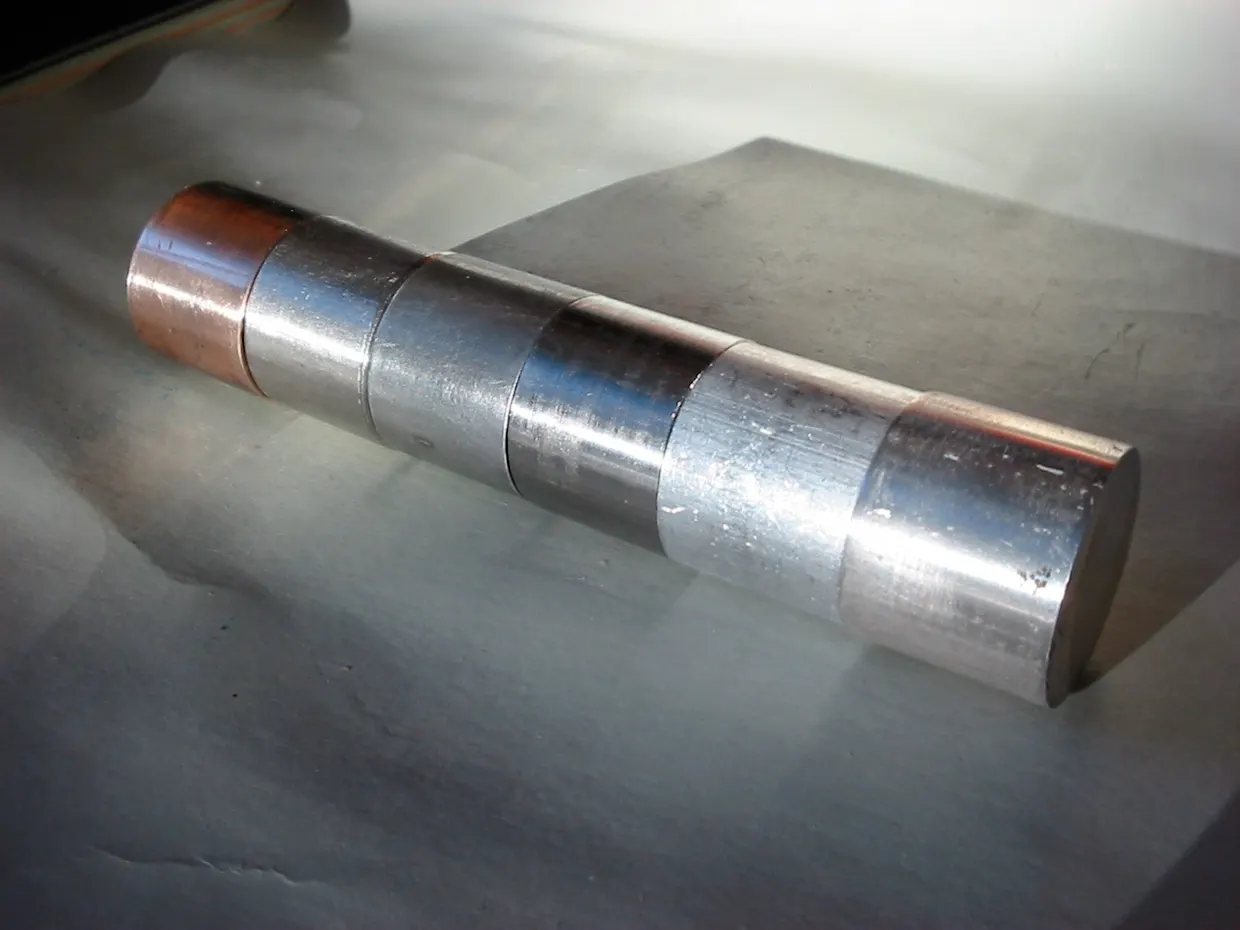
A team from the University of Science and Technology Beijing, together with colleagues from the University of Auckland, the University of Queensland and other institutes, reported a titanium alloy in which oxygen is deliberately placed in both coexisting phases. The work was published on 3 November 2026 in Nature Communications nature.com
Nature Communicationsnature.comOpen source ↗. The resulting α-β-O' alloy, Ti-6Al-4V-0.39O, shows an ultimate tensile strength of 1200 ± 30 MPa and a ductility of 23.5 ± 1.5%. Its strength-and-strain product is 28.2 GPa·%.
Oxygen in the β phase
Oxygen is traditionally detrimental to ductility in titanium alloys. Recent studies have treated it as a design tool for forming beneficial microstructures, but its role has mostly been limited to the α phase of dual-phase α-β alloys, according to the authors.
The team considered introducing sufficient oxygen into the β phase while both phases coexist. They report that strategic oxygen partitioning across α and β enables a substantial oxygen content in β. This triggers a β → O' phase transformation through atomic rearrangements.
Deformation mechanism
According to the authors, the O' phase acts as a precursor for a stress-induced martensitic transformation, O' → α", during deformation nature.com
Nature Communicationsnature.comOpen source ↗. This activates two mechanisms together: transformation-induced plasticity and twinning-induced plasticity. The authors link the combination of strength and ductility in the alloy to this synergy.
The study included synchrotron radiation X-ray diffraction measurements on the BL12SW beamline at the Shanghai Synchrotron Radiation Facility.
The authors describe the result as a general principle for strategically tuning oxygen in titanium alloy design. They also state that the work demonstrates potential for recycling oxygen-contaminated titanium waste.