Sapienza team swaps entanglement between photons from two separate GaAs quantum dots, fidelity 0.71
Photon pairs from two independent gallium arsenide quantum dots were used for entanglement swapping in a laboratory setup, a step toward quantum repeaters. Fidelity reached 0.71 with time selection.

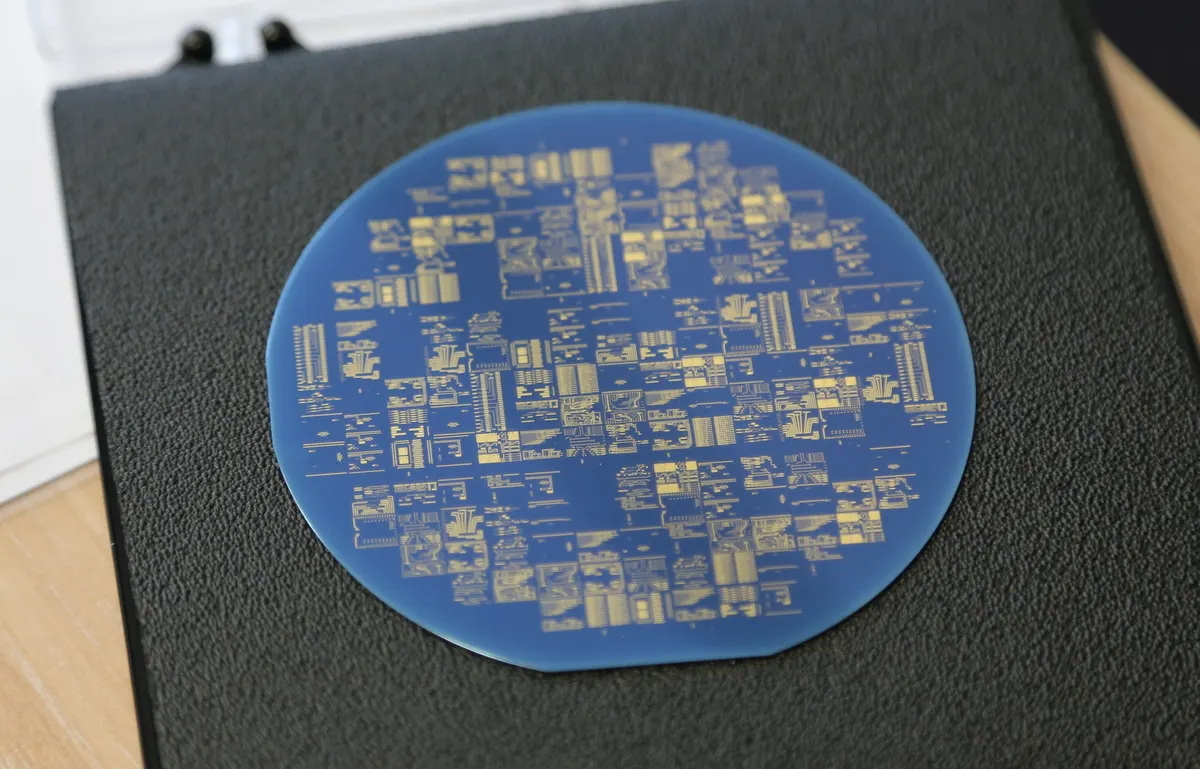
Researchers at Sapienza University of Rome led by Giuseppe Ronco, together with Klaus Jöns of Paderborn University, demonstrated photonic entanglement swapping using photon pairs from two separate gallium arsenide (GaAs) quantum dots, according to a paper in Science Advances science.org
Science Advancesscience.orgOpen source ↗. The measured fidelity reached 0.71(2), more than 10 standard deviations above the classical limit of 0.5. The experiment is a laboratory demonstration, not a working network.
How the swapping works
Entanglement swapping creates entanglement between particles that never interacted. Each quantum dot emits its own entangled photon pair, independently of the other. One photon from each pair meets at a beam splitter, and the two undergo a Bell-state measurement. For a suitable outcome, the two unmeasured photons become entangled although they never met.
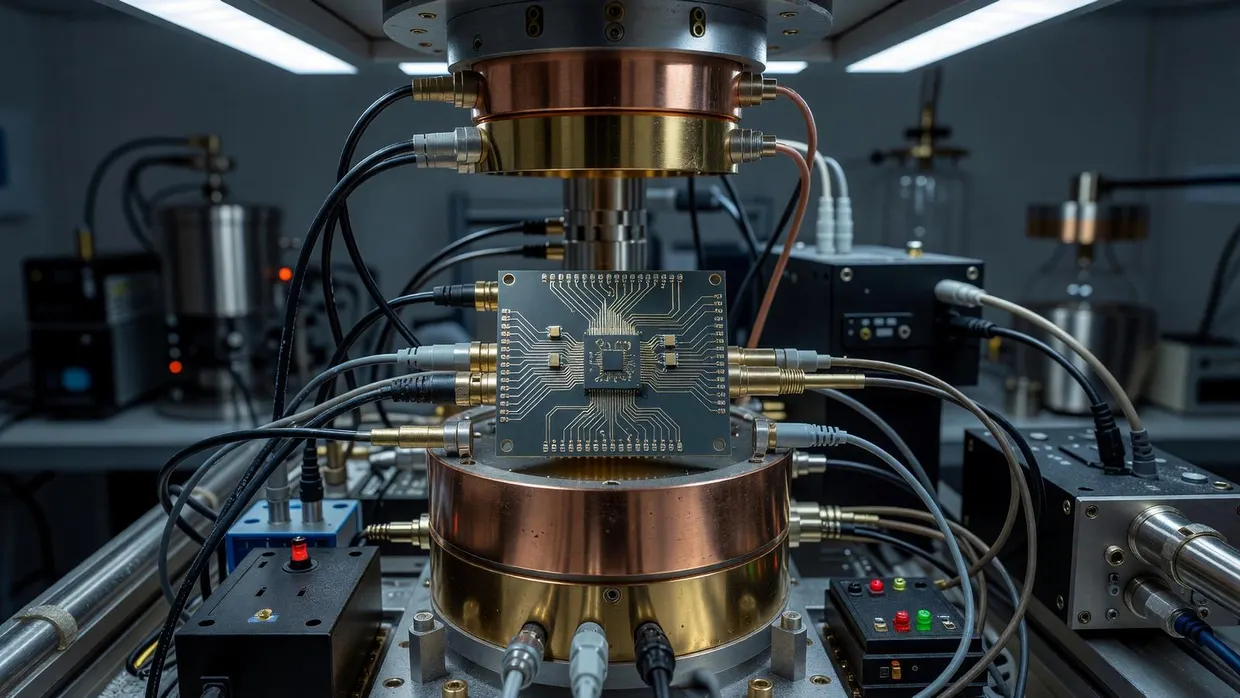
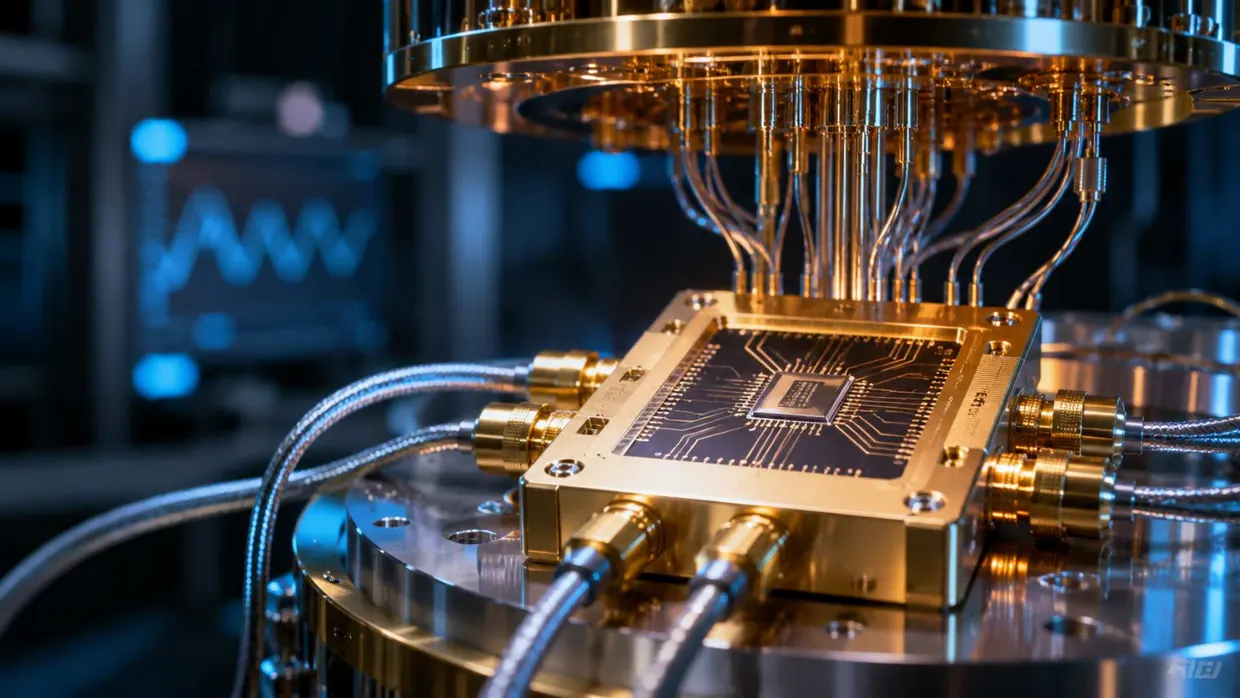
The difficulty is that different quantum dots usually emit photons with slightly different energies and properties, while interference requires nearly indistinguishable photons. The dots were therefore deterministically embedded in hybrid semiconductor-piezoelectric devices and in circular Bragg resonators, which collect the emitted light and shape its temporal profile. The piezoelectric elements changed the mechanical strain in the semiconductor and tuned the photon energies to each other. The two dots operated in separate cooling systems, and the setup included a 150-metre optical fibre link.
Fidelity and limits
Until now, swapping with entangled photons from remote systems had been done only with probabilistic sources, where the pair generation rate trades off against the degree of entanglement. Quantum dots can emit entangled pairs on demand, which avoids this trade-off science.org
Science Advancesscience.orgOpen source ↗.
The peak value of 0.71 was obtained by counting only detections within a narrow time window. Without that selection, one of the measurement configurations gave a fidelity of 0.60 ± 0.01, still above 0.5. Successful events occurred only a few times per second, so the setup is not yet suited to practical long-distance transmission.
The linking depends on the outcome of the Bell measurement and does not succeed on every attempt. A larger network would need higher entanglement quality and event rate, plus suitable quantum memories. The authors report that a theoretical model explains the data quantitatively and indicates how the performance of the protocol could be improved. They state that the work opens a path to using quantum dot entangled-photon sources in quantum repeater networks.