Physicists Build Three-Component Hubbard System Using Quantum Gas Microscope
Researchers demonstrated a tunable three-flavor Fermi-Hubbard model in an optical lattice, confirming the stability of Mott insulator states.
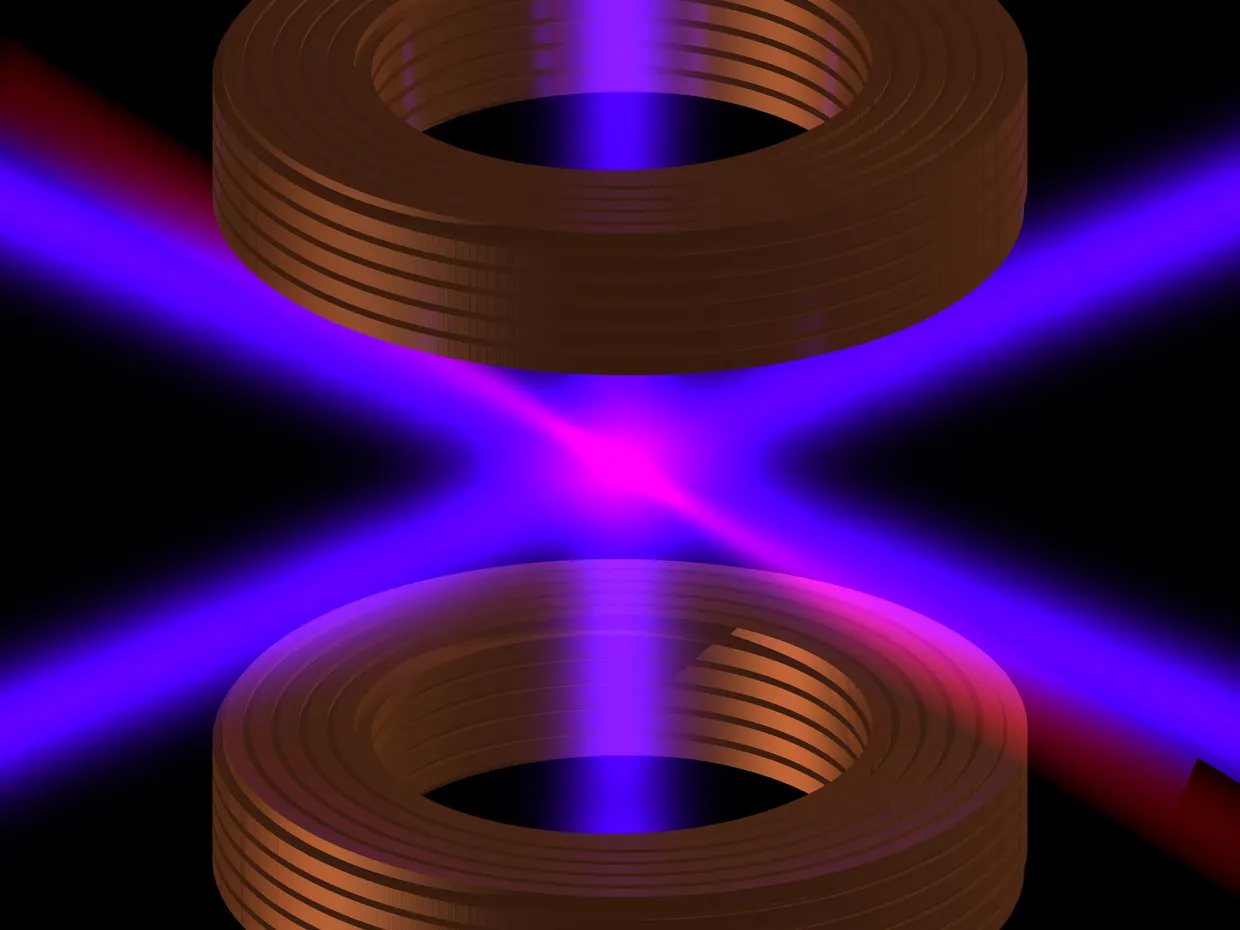
An international team of researchers from Germany, Thailand, India, China, and the United States has experimentally realized a three-component Hubbard system with tunable interactions, according to EurekAlert. The experiment utilized ultracold fermionic atoms confined in an optical lattice and was imaged using a quantum gas microscope with single-atom spatial resolution eurekalert.org
EurekAlerteurekalert.orgOpen source ↗.
Simulation of Multiflavor Systems
Standard Hubbard models typically account for two spin states to simulate electron dynamics in solid-state physics and probe phenomena like high-temperature superconductivity. By introducing a third internal atomic state, the team led by Peter Schauss from the University of Hamburg created a three-flavor system that structurally mimics multi-color interactions in quantum chromodynamics. Distinguishable fermions occupying the same lattice site experienced magnetic-field-dependent interaction energies, enabling precise control over inter-particle dynamics.
Mott States and Magnetic Phases
Despite theoretical concerns that three-body collisions would rapidly destabilize the atomic ensemble, the experimental setup remained stable enough to observe a Mott insulator phase, where strong repulsive interactions suppress multiple site occupancy. The researchers also developed a technique to measure triple-occupied lattice sites directly. The measurements revealed concurrent ferromagnetic correlations between two states alongside antiferromagnetic correlations between others, matching numerical calculations carried out by theorists at Rice University.