Neotropical bats: 95 possible undescribed lineages in 45 complexes found by DNA analysis
Analysis of 12,813 DNA sequences points to hidden diversity in at least one-fifth of recognized taxa; most complexes are projected to lose over 50% of suitable habitat by 2070.
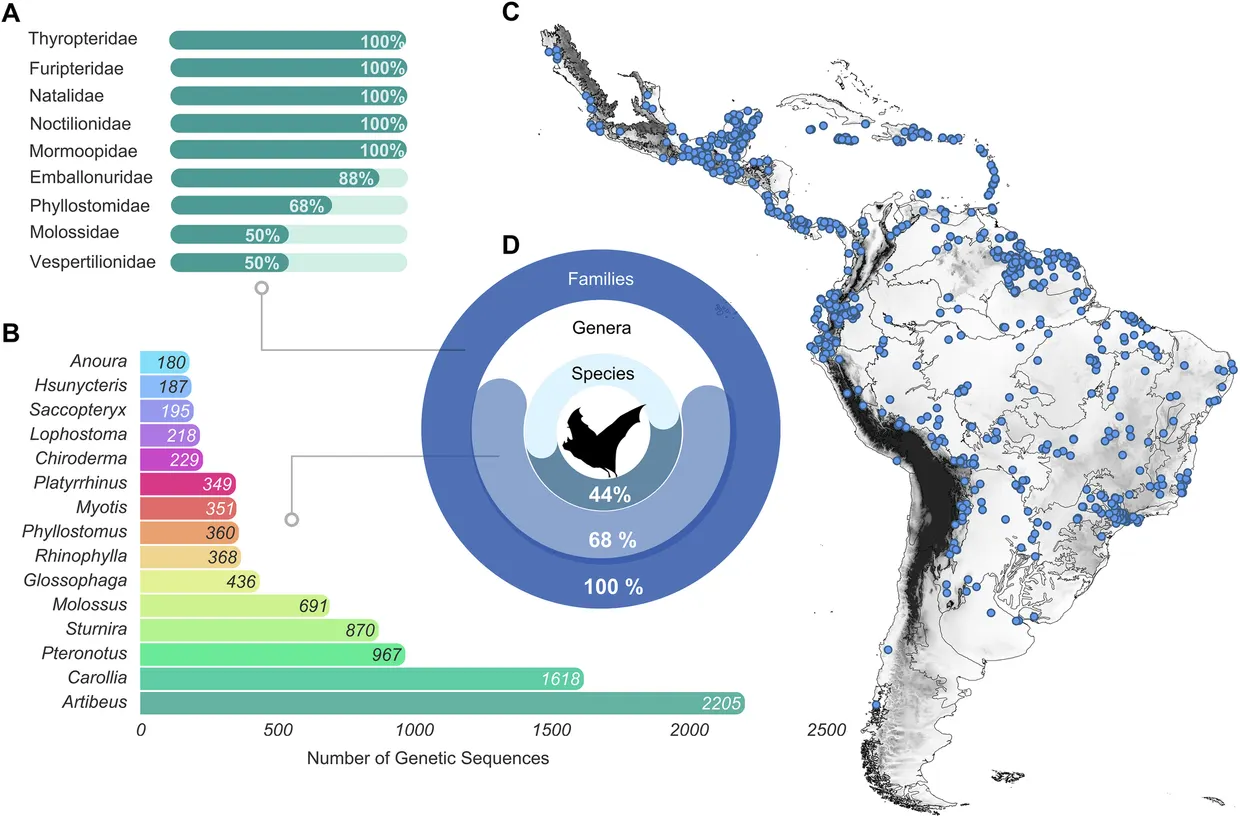
A study in Nature Communications analyzed 12,813 mitochondrial DNA sequences of Neotropical bats from public repositories. It identified 95 lineages that may represent undescribed species within 45 species complexes nature.com
Nature Communicationsnature.comOpen source ↗. According to the authors, at least one-fifth of recognized taxa may harbor hidden diversity across the entire evolutionary spectrum.
The work combined molecular species delimitation, phylogenetic inference, ecological niche modelling and spatial conservation analyses. The lineages are putative: the study does not formally describe new species.
Dataset and approach
The authors constructed 63 phylogenies covering 65 genera. The dataset includes all nine bat families of the region, about 68% of known genera (65 of 95) and about 44% of currently recognized species (191 of 435).
The Neotropics hold about 30% of recognized bat species. Worldwide, bats comprise more than 1,500 described species, and over the past two decades taxonomists have described more than 300, many of them previously hidden within morphologically similar complexes nature.com
Nature Communicationsnature.comOpen source ↗. The authors state that at current description rates, formally recognizing the newly identified diversity would take decades.
Habitat loss and hotspots
According to the study, 62% of the complexes face imminent habitat loss, and most are projected to lose over 50% of their suitable habitat by 2070.
The authors also developed a Hidden Species Richness (HSR) Index. It identifies ten hotspots where undescribed richness coincides with significant human threats and extreme climate vulnerability. They describe these regions as the places where research effort is most needed.
The authors argue that the results can guide policymakers, institutions and conservation funding toward taxonomic and geographic priorities. They say that undescribed species are absent from conservation planning and policy frameworks, so some may disappear before they are documented nature.com
Nature Communicationsnature.comOpen source ↗.