Embry-Riddle's Nykyri proposes Kelvin-Helmholtz vortices as the heat source of the solar corona
The model uses Inouye telescope images and scaling laws from near-Earth spacecraft data to estimate how the corona is heated to more than a million degrees.
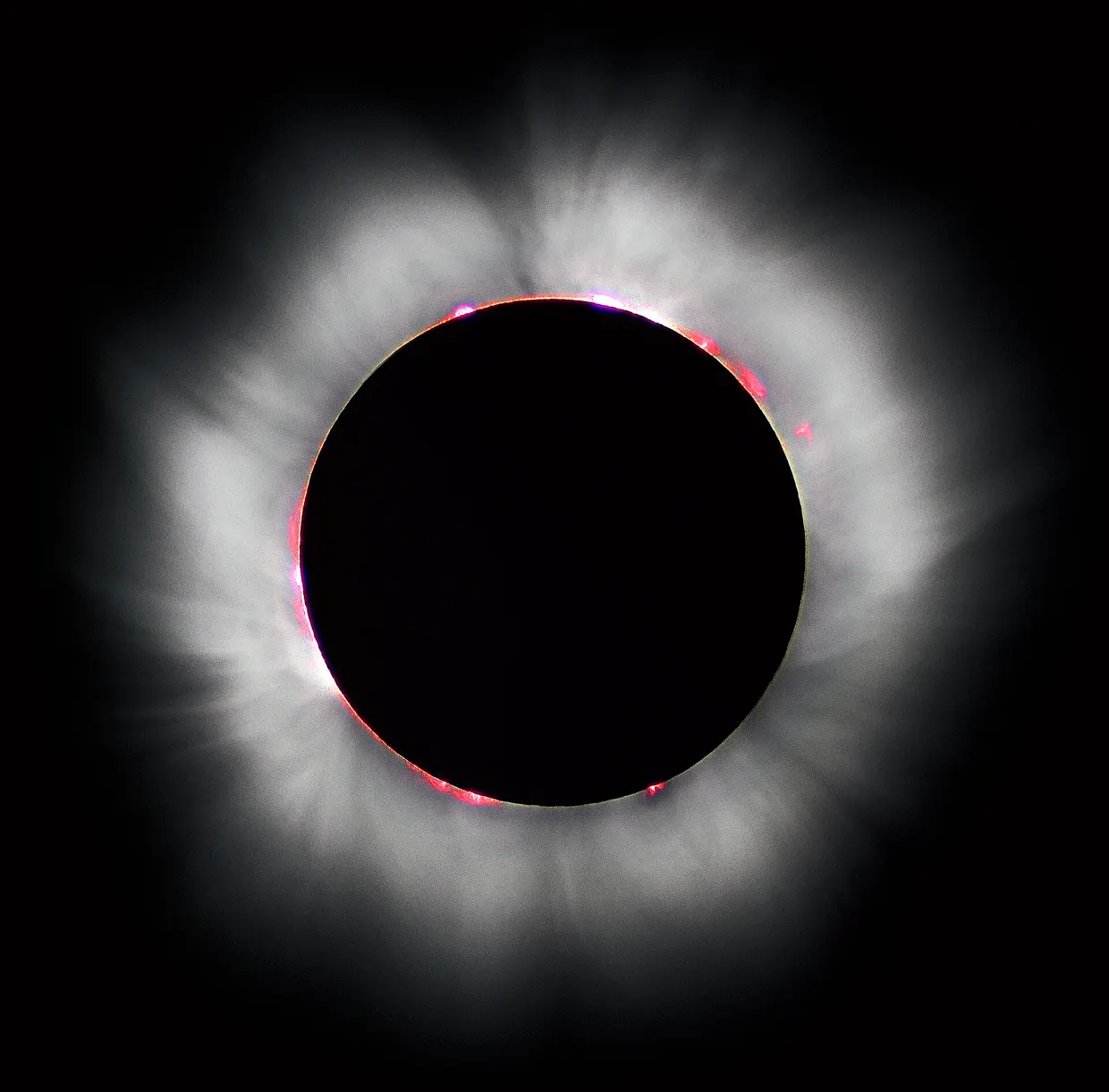
Dr. Katariina Nykyri, a professor in the Department of Physical Sciences at Embry-Riddle Aeronautical University, has proposed a model for how the sun's corona is heated to more than a million degrees, hundreds of times hotter than the visible surface, according to erau.edu. The work builds on 27 years of her research into Kelvin-Helmholtz (KH) waves. It was published on November 5 in The Astrophysical Journal Letters as a single-author paper. erau.edu
erau.eduerau.eduOpen source ↗
Whirlpools on the solar surface
KH waves are whirlpools that form when two fluids flow past each other at different speeds, like eddies along a river bank where the fast main flow meets slower water. In August, a study in Nature by Kuridze et al. presented images and time-lapse video of KH waves on the sun's visible surface, the photosphere. They were recorded by the NSF Inouye Solar Telescope and had not been seen there before.
Nykyri realized that what she had learned about the waves and magnetic reconnection closer to Earth could help explain coronal heating. Spacecraft cannot visit the lower corona, where the heating begins. However, simple scaling laws derived from spacecraft measurements near Earth show how effectively magnetic energy is converted to heat in reconnection, and they seem to apply wherever reconnection takes place. Applying them to the properties of the observed vortices gives an estimate of coronal heating.
Closing the scale gap
The observed vortices are tens of kilometers across, while reconnection ignites in magnetic layers that are nearly a million times thinner at the sun's surface. Nykyri showed that the swirling motion of a vortex winds up the magnetic field and thins these layers exponentially fast. This closes the million-fold gap within the lifetime of a single vortex. A plasma simulation also showed how large-scale KH structures can collapse into thin current sheets where reconnection begins. erau.edu
erau.eduerau.eduOpen source ↗
According to the paper, only 5–8% of the mechanical energy stored in the vortices would need to reach the corona to replenish the heat it radiates away. Confirming this requires tracking wave transmission and polarization through the chromosphere.
Vyacheslav Lukin, NSF Plasma Physics Program Director, said the model unifies earlier, incomplete explanations involving plasma waves, instabilities and reconnection. Nykyri noted that the hot corona is the source of the solar wind and of space weather that can disrupt satellites, GPS, radio communications and power grids. She added that understanding how magnetic energy turns into heat may also help fusion research.