Wellcome Sanger team finds record 15,898 gene copies in two-toed sloth genome; 38 are candidates
A two-toed sloth genome carries more gene copies than any mammal reported. Authors link 38 of them to energy metabolism, but only as a hypothesis, untested in cells.
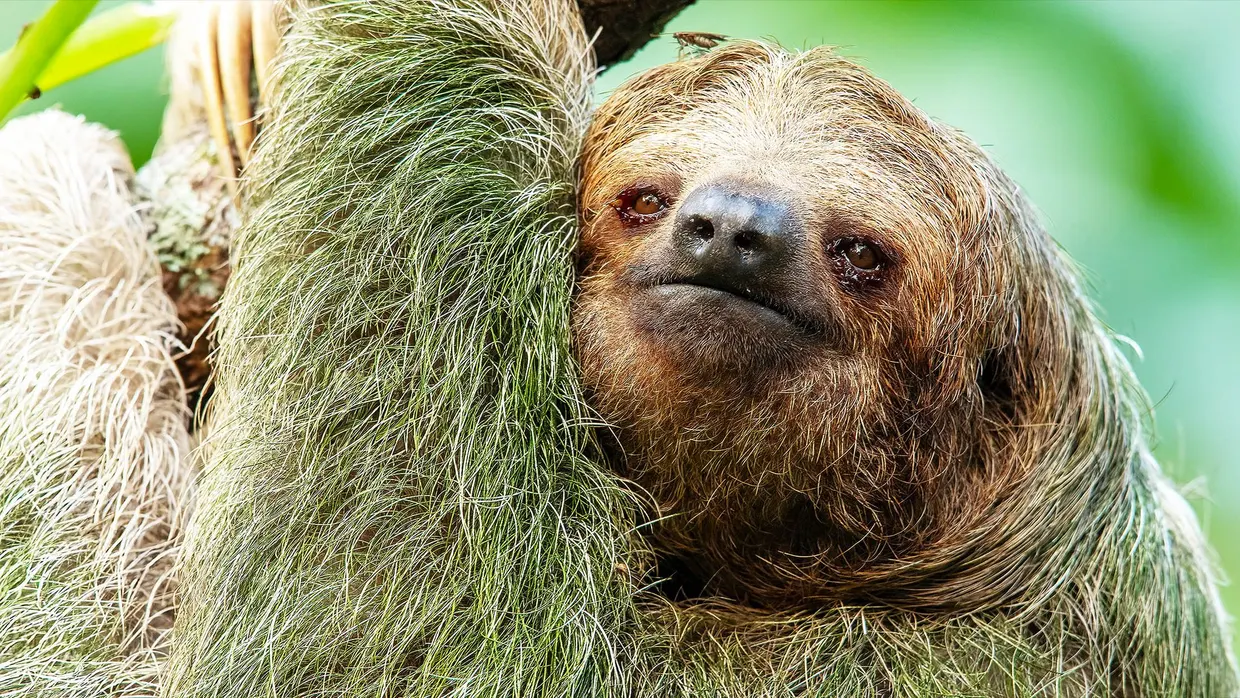
A team co-led by Marcela Uliano-Silva of the Wellcome Sanger Institute in Cambridge and Camila Mazzoni of the Leibniz Institute for Zoo and Wildlife Research in Berlin has sequenced the genome of a two-toed sloth, according to Earth.com. The animal, Lama Su, lived at Tierpark Berlin. The finished genome is about 3.2 billion letters long, with almost every letter placed on a chromosome. The study was published in BMC Biology. earth.com
Earth.comearth.comOpen source ↗
Sloths can run their bodies on less than half the energy expected for mammals of their size, and the reason is not explained.
Record number of gene copies
The jumping-gene machinery can also copy the message read off an ordinary gene and write it back into DNA as a new copy, without the switches that turn a gene on. The two-toed sloth genome has 15,898 such copies. A human genome has around 8,000, and other mammals typically carry 2,000 to 8,000. No other animal has been reported with more.
The four other xenarthrans compared all had more than 10,000, and in the two-toed sloth some single genes were copied more than 100 times. About 32% of the sloth's copies also exist in at least one of the other two sloths and in no other animal checked, which places their origin roughly 30 million years ago. Of the copies found only in the two-toed sloth, nearly 16% are so close to their parent gene that they were made recently or are still being made. earth.com
Earth.comearth.comOpen source ↗
From 5,123 copies to 38 candidates
The team started with 5,123 copies shared only with other sloths. Of these, 2,347 were active in at least one of five tissues, 525 kept at least 70% of the parent protein's instructions, and 123 showed signs of protection by natural selection. After manual checking of sequencing reads, 38 remained.
Many of the 38 are copies of genes that work in mitochondria. Others come from genes that handle fats or help a cell respond to stress.
The authors suggest the copies may act as genetic "backup systems" for mitochondria under relaxed pressure, but they describe this as a hypothesis. earth.com
Earth.comearth.comOpen source ↗ They have not tested what any copy does in a living cell, and the mitochondrial DNA result behind the idea is unpublished. The comparison also used one anteater and one armadillo, out of 11 and 25 living species. The team plans to grow sloth cells in the lab and test the copies there.