Trinity College Dublin: IAP antagonists kill senescent cancer cells left after chemotherapy in lab study
Researchers at Trinity College Dublin showed that IAP proteins shield chemotherapy-surviving tumor cells, and that blocking them removes senescent cells in lab experiments.
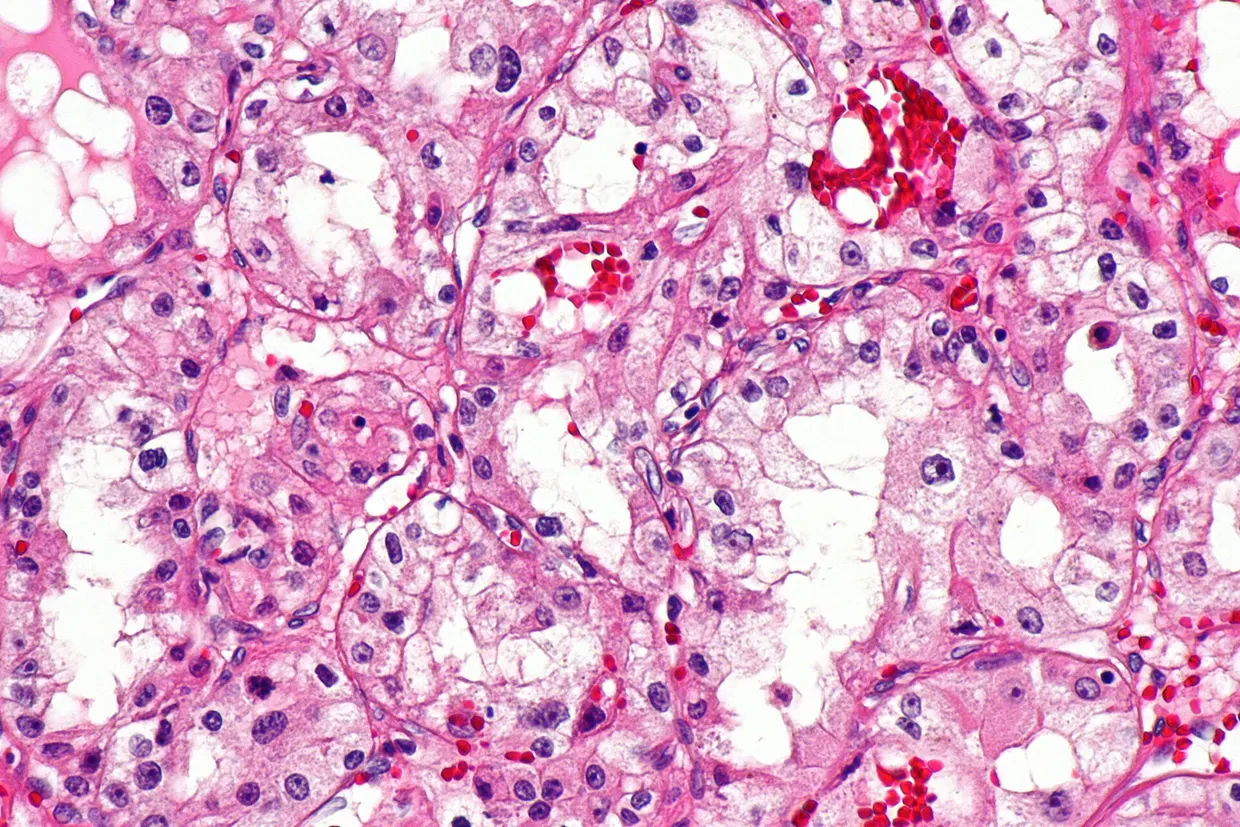
Scientists at the Smurfit Institute of Genetics, Trinity College Dublin, have described how some tumor cells survive chemotherapy and what keeps them alive afterwards. The work, led by Professor Seamus Martin and Dr. Gokhan Gunay, was published in Science Advances on 23 October 2026 science.org
Science Advancesscience.orgOpen source ↗. The authors report that small-molecule IAP antagonists selectively eliminated senescent cells in their experiments.
How cells survive chemotherapy
Cytotoxic chemotherapy typically eliminates only a fraction of a tumor. Surviving cells may enter persistence or premature replicative senescence, a state that can lead to recurrence. According to the SciTechDaily account, within a few days of exposure such cells can grow to almost ten times the size of a normal cell and release more inflammatory mediators that attract immune cells.
The team found that therapy-induced senescence was associated with strong up-regulation of the death receptors Fas and/or TRAIL-R2/DR5, both in vitro and in vivo. These receptors restricted entry into senescence. They also exerted selective pressure on senescent cells by promoting assembly of pro-apoptotic RIPK1/FADD/Caspase-8 complexes, called FADDosomes and restrained by cFLIP L. Deleting CASP-8 markedly increased entry into senescence and prolonged the life span of senescent cells.
Dependence on IAPs
The protein cIAP-2, which inhibits death receptor-driven cell death, was also up-regulated in senescent cells, and deleting IAPs suppressed entry into senescence science.org
Science Advancesscience.orgOpen source ↗. The authors conclude that death receptor-driven assembly of RIPK1/FADD/Caspase-8 complexes makes senescent cells dependent on IAPs.
This dependence can be exploited. IAP antagonists showed potent senolytic activity by enhancing death receptor-initiated Caspase-8 activation. In other words, the proteins that helped cells escape chemotherapy remained necessary to keep them alive afterwards.
Professor Martin said the findings suggest tumor defenses might be lowered by neutralizing IAPs after chemotherapy, which should block entry into senescence and kill more tumor cells. This is the researchers' interpretation of laboratory results. Senescent cells also accumulate in tissues with age, and that buildup is thought to contribute to age-related inflammation.
The work was supported by the European Research Council (Project DESTRESS) and Research Ireland.
Sources · 2
Vous avez trouvé une erreur ?À lire aussi