Gerrothorax maritimus: first fully marine stem amphibian found in 237-million-year-old Triassic rocks
Two nearly complete Late Triassic skeletons show an armoured amphibian that, according to the authors, lived in fully marine conditions, without access to land or fresh water.
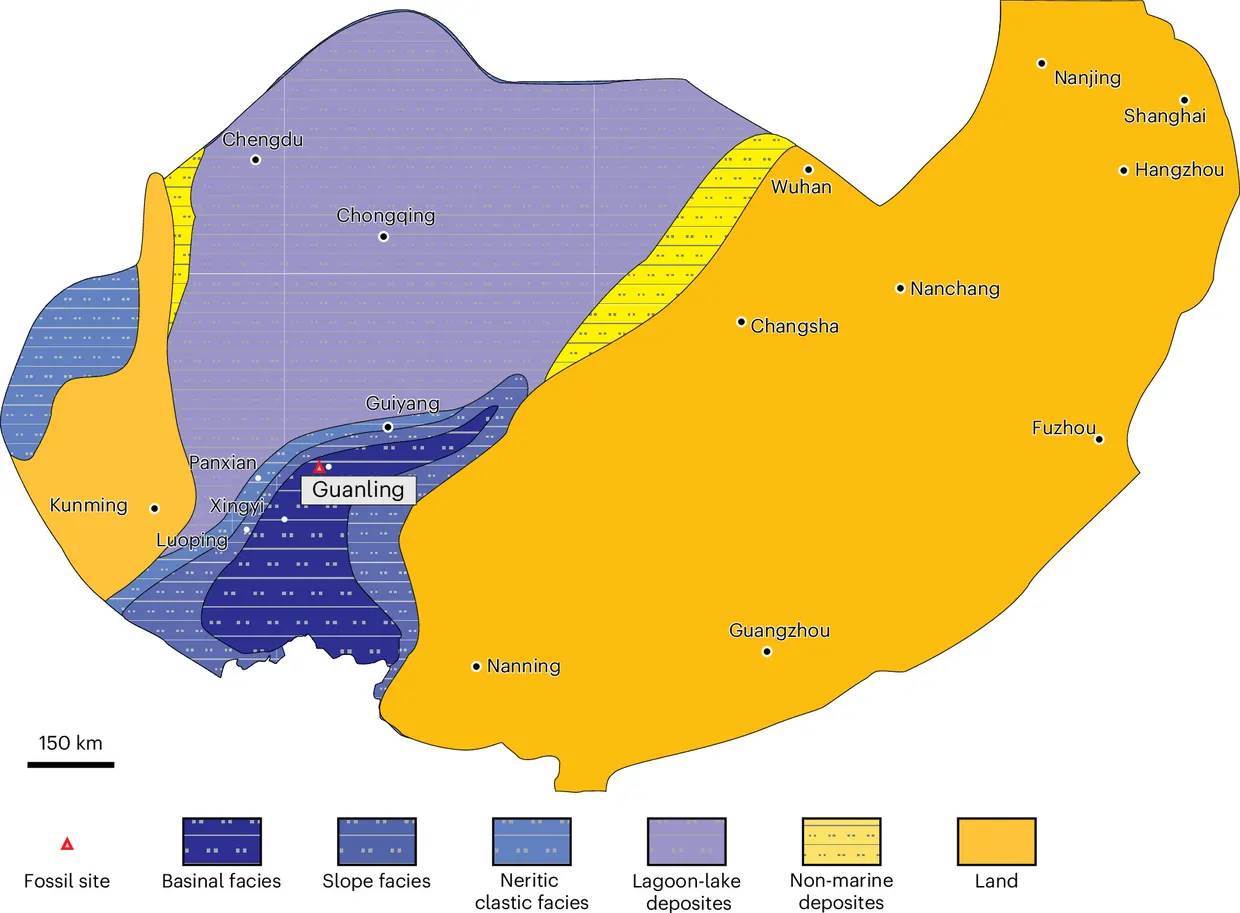
A study published on nature.com describes Gerrothorax maritimus, the first fully marine species of a stem amphibian. It is based on two nearly complete skeletons from the Late Triassic, about 237 million years ago nature.com
nature.comnature.comOpen source ↗. According to the authors, the animal survived without food or fresh water from land. The work appeared in Nature Ecology & Evolution, and the specimens are about 70 centimetres long.
Land vertebrates colonized the sea repeatedly. Mammals, reptiles and birds all include species that live without food or fresh water from land. Amphibians, both crown and stem groups, had no such member, partly because of their salt-intolerant skin.
Evidence for a marine lifestyle
The skeletons were found articulated in ancient marine sediments, about 30 kilometres from land. To check whether the animals lived in the sea or were carried there after death, the researchers analysed the chemistry of the bones. Levels of different strontium forms matched those of seawater of that time.
The authors conclude that G. maritimus lived in the ocean, fed on marine organisms and drank salt water. Lachlan Hart, a palaeobiologist at the University of New South Wales who was not involved in the study, called it the first solid evidence of an amphibian adapted long-term to a purely marine environment.
Armour and gills
The animal had a flattened body, upward-facing eyes and a covering of bony plates. It descended from a lineage with complete body armour nature.com
nature.comnature.comOpen source ↗. Such armour would limit the skin-based exchange of water, gas and salt typical of amphibians. It instead forced the use of the gills and gut, which can become more tolerant of salt. According to the authors, this probably prepared the lineage for marine adaptation.
The armour may also have reduced water loss, while retained fish-like respiratory structures would have allowed life underwater throughout the animal's life. The fossils suggest an ambush predator that lurked on the seafloor and used its jaw to suck in fish and other small animals.
The researchers note that other marine amphibians may exist but go unnoticed, since palaeontological searches for these animals usually focus on ancient freshwater ecosystems. The fossils are deposited in the GMG collection, and the data are available in the Supplementary Information.