Harvester ant colonies in a 34-year study of 3,285 colonies show falling mortality with age
In western harvester ants, older colonies died less and reproduced more, the reverse of aging in most vertebrates and insects, a field study found.
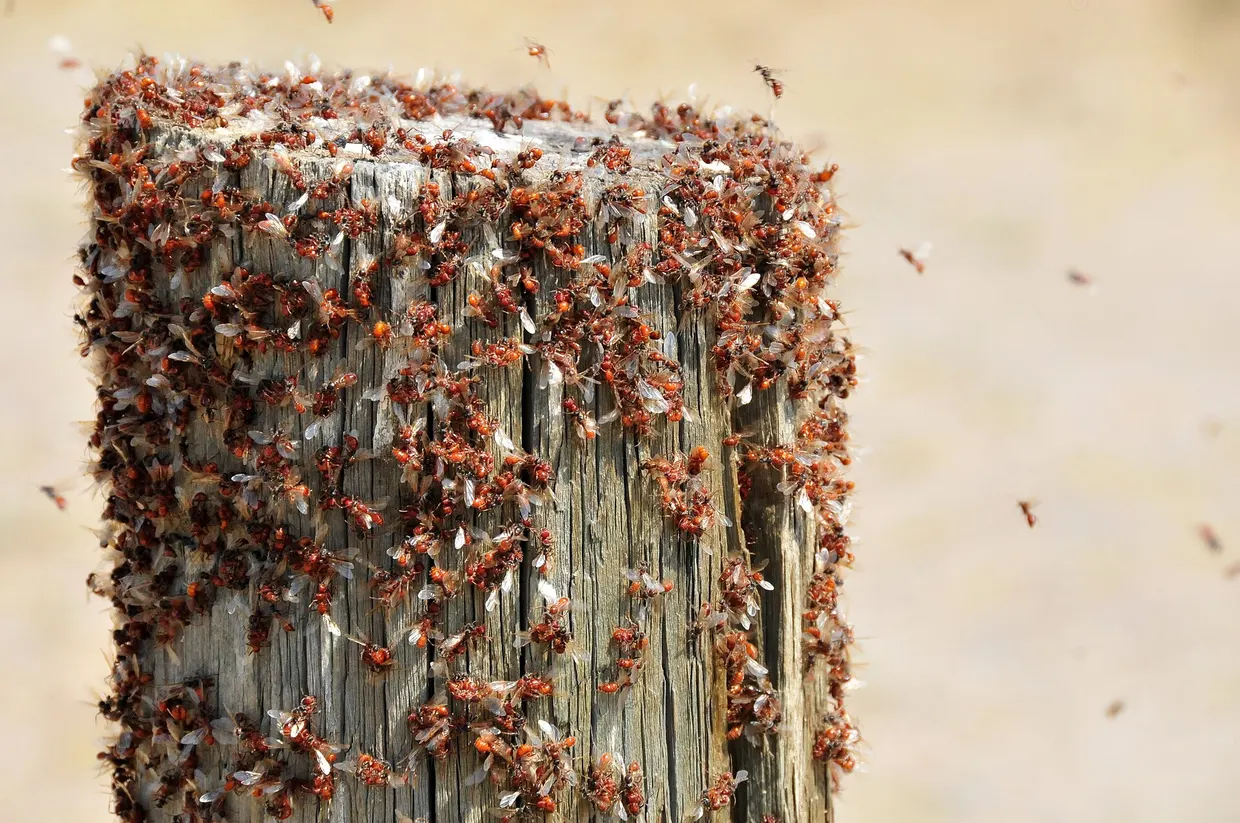
A 34-year study of 3,285 colonies of known age of the western harvester ant, Pogonomyrmex occidentalis, found that mortality decreases and reproduction increases with colony age. The authors call this pattern negative senescence and report it in the Proceedings of the National Academy of Sciences pnas.org
Proceedings of the National Academy of Sciencespnas.orgOpen source ↗. Most vertebrates and insects show the opposite: mortality rises and reproduction declines as they age.
Theoretical models identify indeterminate growth and the absence of a reproductive cost of growth as the key traits favoring negative senescence. Ant colonies keep growing throughout their lifetime, so older colonies are larger on average. The authors found no evidence of a tradeoff between colony growth and reproduction. The two were positively correlated, a synergism that may favor continued investment in growth.
Harvester ants live in a temporally variable environment that shapes investment in reproduction. At the population level, greater reproduction in one year did not lead to a higher number of new colonies in the following year. According to the authors, environmental unpredictability decouples reproduction from recruitment and selects for an extended reproductive lifespan, a trait that parallels changes in aging.
The authors also discuss the features that harvester ant colonies share with other organisms, in order to identify functionally homologous mechanisms for avoiding senescence, as well as the traits specific to highly eusocial species.