Weill Cornell and NYGC researchers build D&D-seq to map protein–DNA binding in single cells
The method uses antibodies to bring a deaminase enzyme to a target protein and reads binding sites by sequencing. According to the authors, it works with standard single-cell multiomic platforms.
Researchers at Weill Cornell Medicine and the New York Genome Center, led by Dr. Dan Landau, have developed D&D-seq, a method that maps in individual cells where transcription factors and other regulatory proteins bind DNA. The paper describing it was published in Cell, according to innovanews.ru innovanews.ru
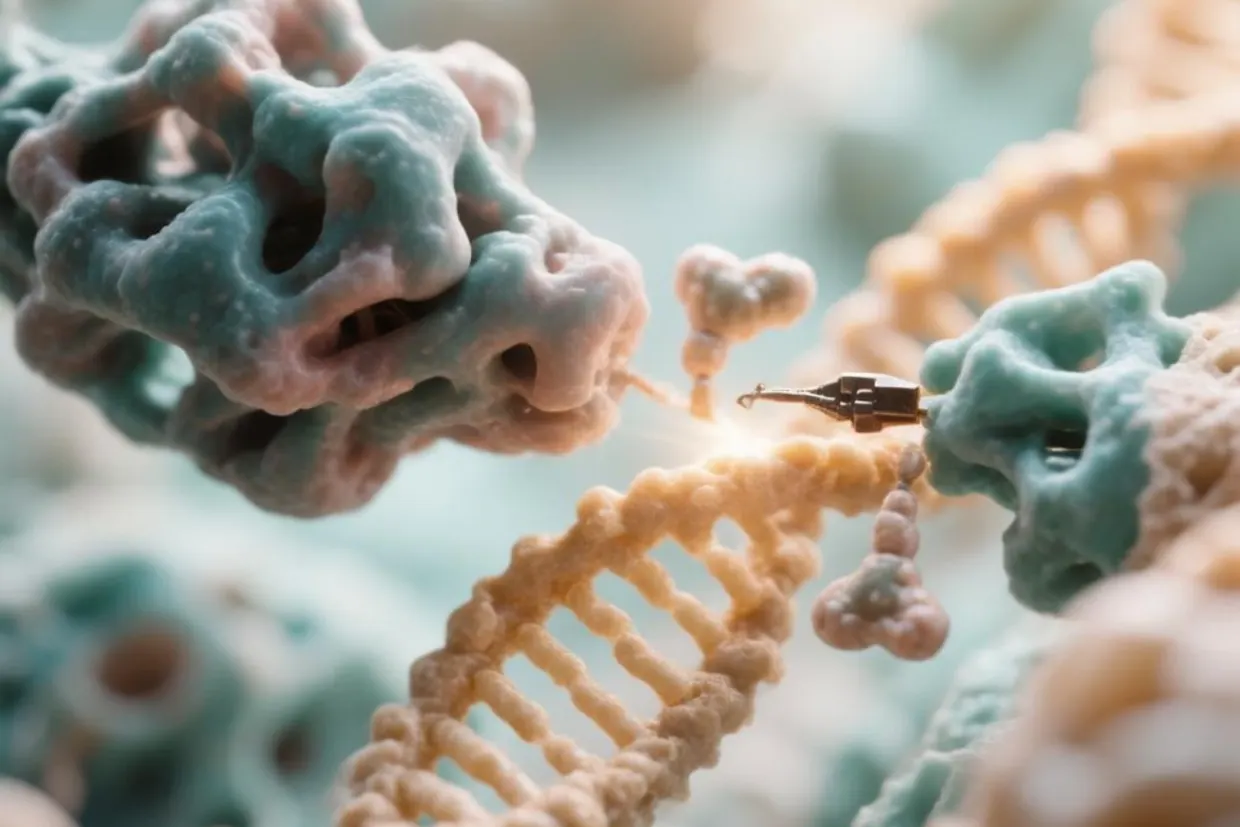
innovanews.ruinnovanews.ruOpen source ↗. Antibodies bring a DNA-editing enzyme to the target protein, which makes it possible to record where that protein contacts DNA.
How D&D-seq works
The name stands for docking of the target protein with a deaminase enzyme, followed by conventional sequencing. Even brief binding of a deaminase-linked protein to DNA leaves a trace that can be detected in sequencing data. The authors report that the method overcomes key technical limitations of existing protein–DNA mapping approaches.
Those approaches, as the material describes them, have relatively low sensitivity to weak or transient binding events and are incompatible with other standard multiomic tools. That incompatibility makes it harder to assemble a full picture of how a gene or a gene network is regulated. A large share of disease-risk hotspots found in genetic studies lies in transcription factor binding sites.
Demonstration and compatibility
To show the potential of D&D-seq, the team mapped binding sites of several transcription factors and of chromatin remodeling proteins, which locally open or close the coiled DNA structure. In blood cells, they mapped the binding of a key transcription factor and compared cells with and without a common leukemia mutation. This let them see in detail how the mutation changes the factor's binding innovanews.ru
innovanews.ruinnovanews.ruOpen source ↗.
The authors state that the method is still being refined and many improvements are planned, but it can already be used with standard single-cell multiomic platforms. This allows protein–DNA interactions to be mapped together with gene activity readouts, genome sequences and other omic layers in the same cells. According to Dr. Ivan Raimondi, the second senior author, D&D-seq is not tied to a specific platform and is essentially a plug-in feature that can be added to existing ones.
Dr. Landau said that transcription factors and other regulators of gene activity are increasingly becoming therapeutic targets, and that technologies of this kind should help in developing and evaluating such treatments. The first co-authors of the paper are Wei-Yu Chi and Dr. Sang-Ho Yoon.