Fossil forest in New Mexico, 74.6 million years old, yielded nearly 80 types of large fruits and seeds
Authors report fossil fruits up to grape size in a late Campanian forest in New Mexico, pointing to diverse seed dispersal in flowering plants before the end-Cretaceous extinction.
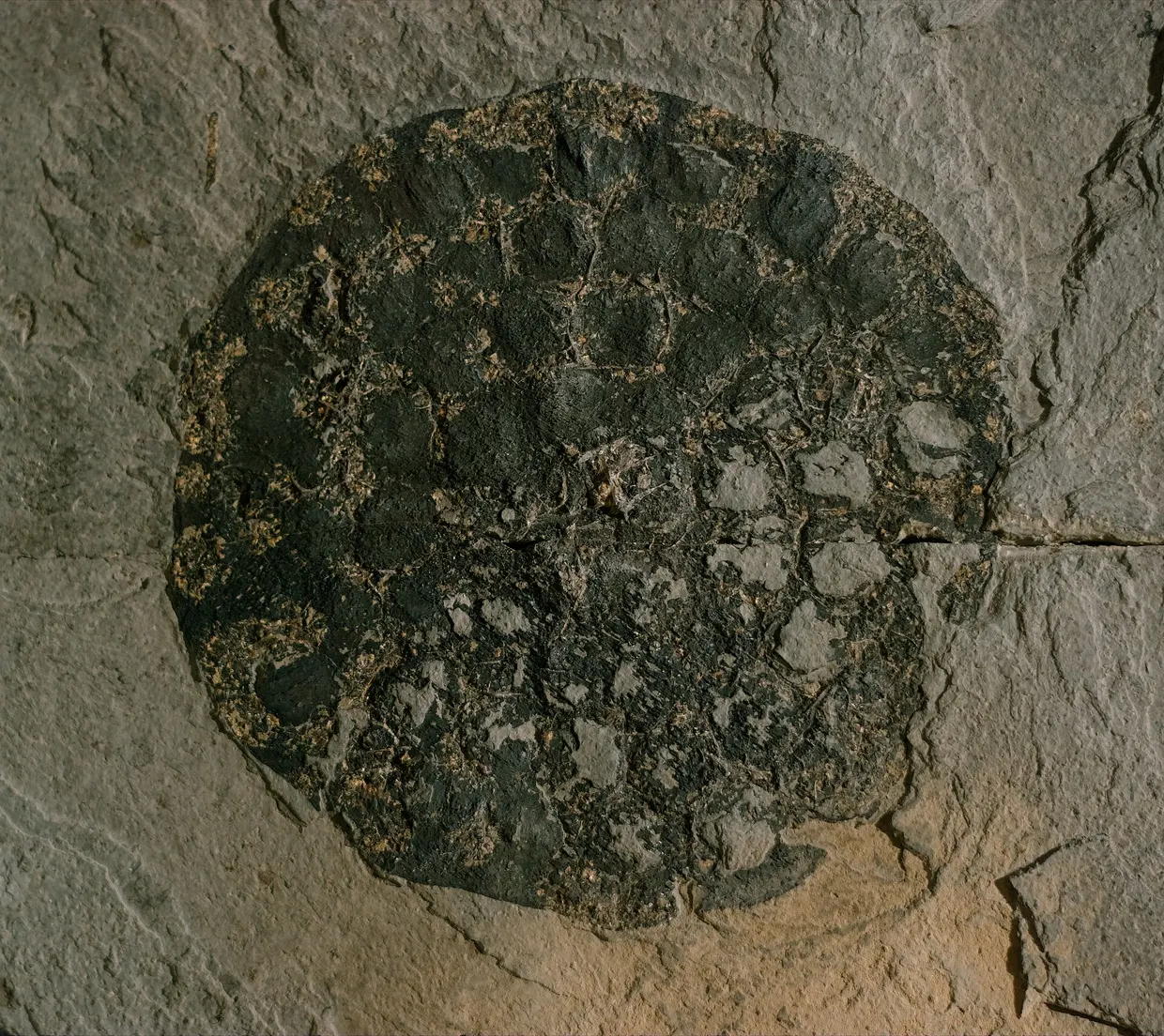
In a paper in Science dated 25 June 2026, Jaemin Lee, Dori Contreras, James Saulsbury, Garland Upchurch and Cindy Looy describe diaspores, or dispersal units, from a late Campanian tropical forest preserved in situ. The forest is 74.6 million years old and lies in the Jose Creek Formation in New Mexico, near Truth or Consequences. The authors distinguish nearly 80 diaspore morphotypes science.org
Sciencescience.orgOpen source ↗.
A forest buried under volcanic ash
The forest was covered by volcanic ash that hardened into tuff. According to Saulsbury, a researcher at the University of Kansas Biodiversity Institute and Natural History Museum, the layer extends for more than a kilometer. The deposits formed at essentially the same time, so many plants were preserved where they lived and died, along with traces of their spatial arrangement. His co-authors call the site a "botanical Pompeii".
The team sorted hundreds of fossil seeds into morphotypes, groups defined by form rather than by confirmed species, because similar-looking fossils may belong to one species or to several. Saulsbury said the authors do not consider the findings a result of preservation bias alone and regard the forest as genuinely unusual.
Large diaspores before the extinction
Flowering plants first appeared about 136 million years ago. The traditional view holds that for much of the Cretaceous their seeds and fruits stayed small, from dust-sized particles to about the size of poppy seeds, and were spread mainly by wind or without fleshy fruit. The New Mexico flora departs from this picture: the authors report increased morphological specialization and an exceptionally large average and range of diaspore volume, comparable to Cenozoic records science.org
Sciencescience.orgOpen source ↗. The largest fruits are about the size of a grape.
The authors conclude that substantial increases in reproductive investment and specialization preceded the end-Cretaceous extinction. In their reading, Cretaceous angiosperms had already evolved diverse dispersal strategies, and animal-mediated dispersal and dense, angiosperm-integrated canopies were established far earlier than previously recognized. Saulsbury noted that large fruits tend to occur in moist, densely forested environments.
The finding bears on the explanation that large fleshy fruits spread as mammals diversified after non-avian dinosaurs died out. Saulsbury suggested that if such fruits already existed in Cretaceous forests, they were likely dispersed not only by early mammals but also by large dinosaurs and other animals.