Jinan University CoO catalyst decomposes ozone for over 24 hours at 70% relative humidity
Chinese researchers made a laboratory CoO mesocrystal catalyst that resists water poisoning; the authors report it also worked at −5 °C and in a 3 m3 room.
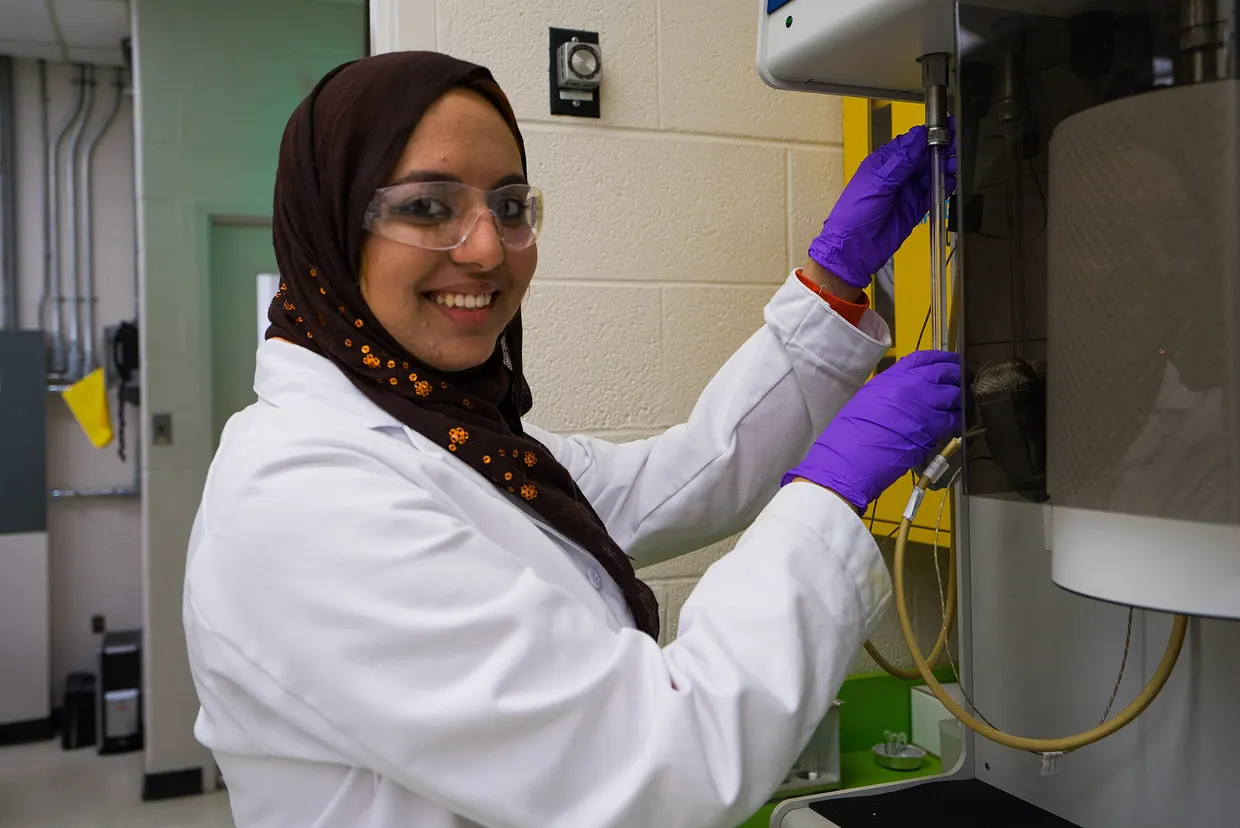
Researchers from Jinan University (Guangzhou), Sun Yat-sen University (Shenzhen campus), the South China Institute of Environmental Sciences and Shanxi University have described a cobalt oxide catalyst for ozone decomposition that keeps working in humid air. The study was published in Nature Communications on 3 November 2026. According to the authors, the mesoCoO-P5 catalyst decomposes ozone stably for more than 24 hours at 70% relative humidity nature.com
Nature Communicationsnature.comOpen source ↗.
The authors describe catalytic decomposition as the most efficient and cost-effective method of mitigating O3 pollution. Its further development is held back by the unsatisfactory humidity resistance and poor long-term stability of current catalysts. The team addressed both problems by combining water transport confinement with electronegativity modulation in confined nanospaces of the catalyst.
Dual-confined structure
mesoCoO-P5 is a hydrophilic dual-space confined CoO mesocrystal with hierarchically organized 0D nanocavities and 2D interlayers. Densely networked hydrogen bonds on the hydrophilic confined surface restrict the mobility of water. According to the authors, this prevents catalyst poisoning caused by water accumulation.
Electronegative hydroxyl groups on the catalyst play a second role: they promote the conversion of peroxide intermediates into O2 nature.com
Nature Communicationsnature.comOpen source ↗.
Test conditions
Beyond the run of more than 24 hours at 70% relative humidity, the catalyst maintained high activity at −5 °C and at an ultrahigh space velocity of 4000 L·g−1h−1. The authors also demonstrated accelerated ozone decomposition in a 3 m3 indoor room and under conditions where dust was present.
The authors conclude that confinement engineering is a new paradigm for enhancing anti-poisoning properties in the design of robust environmental catalysts.
Jialin Li and Zicong Jiang contributed equally to the work. Correspondence is listed for Jingling Yang, Yang Yun and Jing Zheng. The article's DOI is 10.1038/s41467-026-79279-x.