Novosibirsk teams make starch hydrogel tablets with Bacillus subtilis, tested on 20 calves with diarrhea
Tablets based on monophosphorylated starch kept the probiotic detectable in the feces of calves with diarrhea longer than a liquid suspension did.
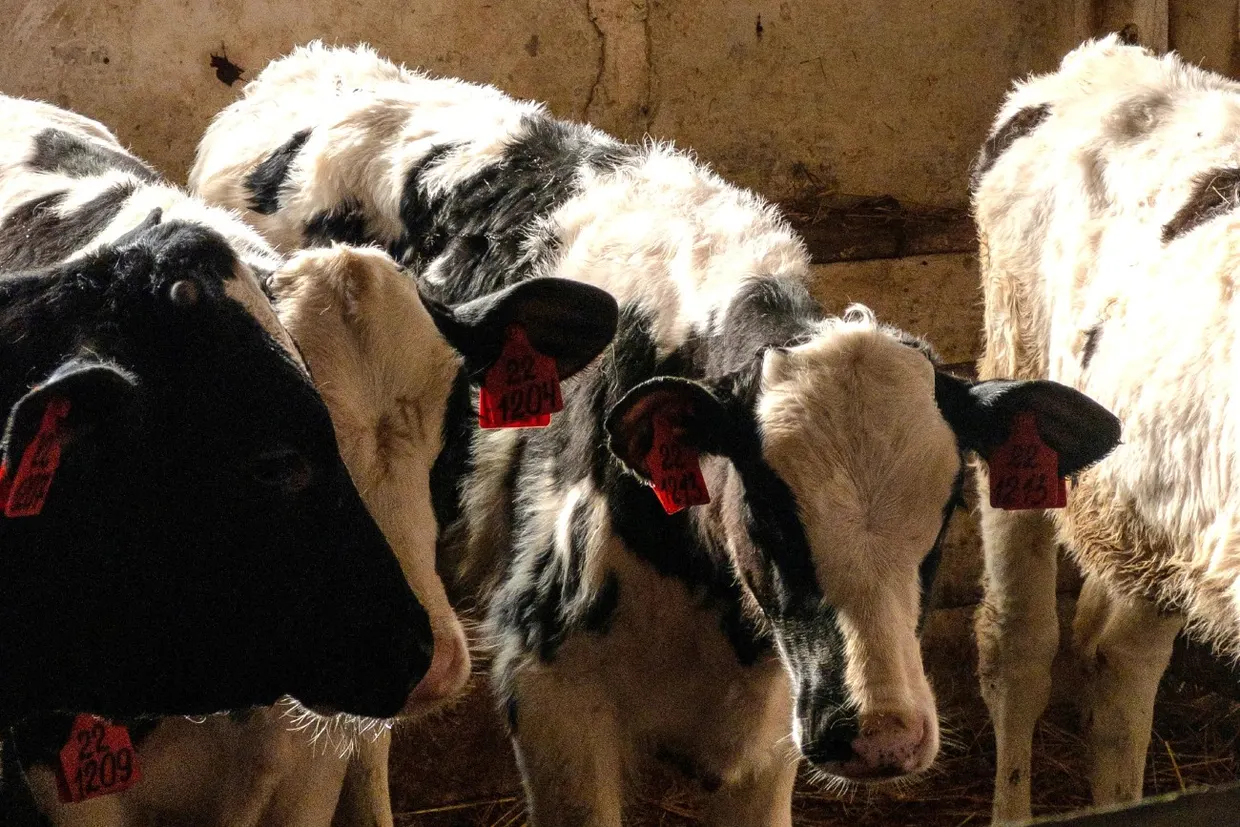
Researchers from Novosibirsk State Technical University, the Siberian State University of Engineering and Biotechnology and the Institute of Solid State Chemistry and Mechanochemistry SB RAS compared two forms of the probiotic Bacillus subtilis in calves with diarrhea. The study was published in Dairy. One form was a liquid suspension, the other a hydrogel tablet based on monophosphorylated starch. The in vivo part involved 20 animals mdpi.com
Dairymdpi.comOpen source ↗.
Tablet design and in vitro tests
Both formulations used a kanamycin-resistant strain of B. subtilis. The potato starch carrier was chemically modified by monophosphorylation, which gave it protective and pH-responsive properties. The modified starch was combined with food-grade agar and a bacterial suspension, then dried into tablets, each holding about eight billion cells.
The authors evaluated the release of bacteria from the tablets in vitro, using sequential buffer solutions that simulate the gastrointestinal tract of calves: pH 6.0, 2.2 and 7.6. The starch matrix kept its protective properties at pH 2.2, where the bacterial titer fell only minimally.
Results in calves
The 20 calves with diarrhea were divided into a control group, a suspension group and a hydrogel group. The probiotic was given for 12 days. Fecal consistency was scored on a 4-point scale, bacterial titers were determined by plate counting, and Candida spp. DNA was quantified by real-time PCR mdpi.com
Dairymdpi.comOpen source ↗.
By day 14, the titer in the suspension group had dropped significantly, while viable cells in the hydrogel group stayed at a significantly higher level (p = 0.023). Fecal consistency normalized by day 3 after treatment withdrawal in both probiotic groups (p = 0.013 for the suspension, p = 0.005 for the hydrogel). The control group showed no improvement (p = 0.057).
Candida spp. DNA decreased significantly in the treated groups on days 3 and 14 (p < 0.001). The authors interpret this as suppression of fungi by B. subtilis.
The authors conclude that the hydrogel prolongs retention of B. subtilis in the intestine and strengthens the effect against diarrhea. The work was done on calves and does not yet describe a finished veterinary product. Project leader Viktoria Bets of the Biopolymer Technologies research center at NSTU NETI said the team plans to develop a complex preparation that includes auxiliary substances alongside the bacteria, and to run experiments on other farm animal species mdpi.com
Dairymdpi.comOpen source ↗.
Quellen · 2
Einen Fehler gefunden?Lesen Sie auch