Researchers map a 1.56 km rose coral formation off the Cocos (Keeling) Islands; genetic tests pending
A formation of rose coral Pachyseris covers about 5.7 hectares at depths of 14 to 65 meters. Genetic tests will show whether it is one organism or many fused colonies.
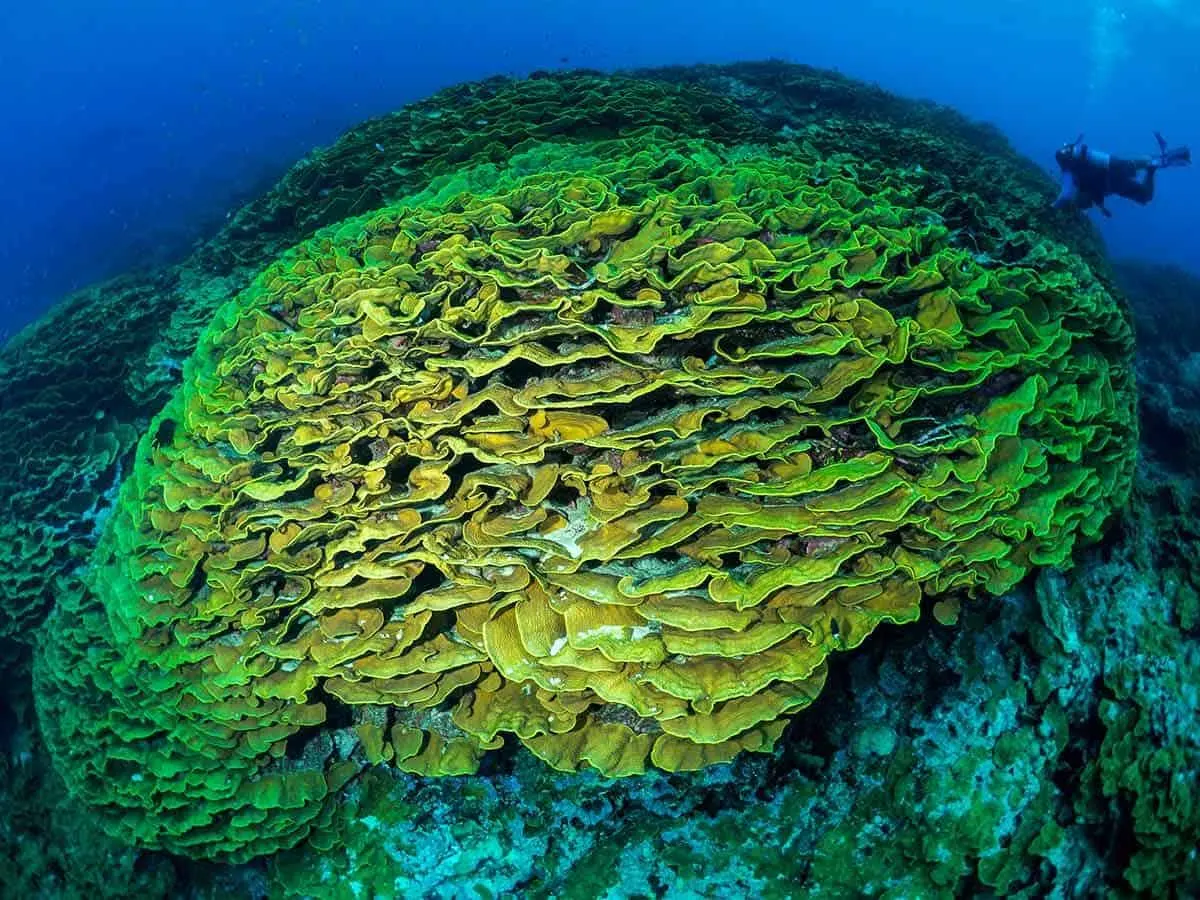
Marine researcher JP Hobbs of Adelaide University, with colleagues from Queensland Museum and James Cook University, has mapped a formation of rose coral (Pachyseris) on the underwater slopes of the Cocos (Keeling) Islands in the Indian Ocean, ZME Science reports. The team traced it over 12 dives spread across several months and measured a length of 1.56 kilometers zmescience.com
ZME Sciencezmescience.comOpen source ↗. Each time Hobbs ran out of air before reaching the end of the coral, so he marked his position with GPS and resumed from that point on the next dive.
According to the Queensland Museum announcement, the formation averages 36.5 meters in width and covers approximately 56,940 square meters, nearly 5.7 hectares. It spans depths from 14 to 65 meters. Researchers also identified additional sections 200 to 300 meters beyond the main formation, so the full extent may be larger. Local dive operator Dieter Gerhard first noticed extensive stretches of the coral more than 30 years ago, but its reach had not been established until now.
One organism or many colonies
Corals are animals. A colony consists of polyps that build calcium carbonate skeletons around themselves, and it can begin with a single polyp that reproduces asexually and produces genetically identical copies. In principle, one coral organism could therefore contain millions of polyps.
Appearances can mislead, however. Separate colonies can grow side by side until they look continuous, and some can fuse; naturally occurring coral chimeras, colonies with tissue from genetically distinct individuals, have been documented. The Cocos formation could be one genetic individual, a set of separate colonies grown together, or a mixture of fused colonies. Researchers are now running genetic tests to tell these options apart, and the answer is not yet known.
Other large corals and open questions
In November 2024, a National Geographic expedition found a Pavona clavus coral in the Solomon Islands measuring about 34 by 32 meters, which scientists estimated to be around 300 years old. In February 2026, two citizen scientists, a mother and daughter, documented a formation on Australia's Great Barrier Reef that stretched 111 meters and covered almost 4,000 square meters. The Cocos formation covers roughly 14 times that area, although it has not been established whether the two are biologically comparable.
Coral reefs are under pressure from warming oceans: according to NOAA, about 84.4% of the world's reef area experienced bleaching-level heat stress during the global event that began in 2023. For the Cocos formation, scientists have yet to establish its age, long-term health or history of bleaching.