In Germany, 29-year-old transplant recipient loses spleen to cat scratch disease, NEJM case report
Doctors took spleen samples to rule out a tumor, and the resulting bleeding required removing the organ. The Bartonella infection cleared six weeks after antibiotics ended.
A 29-year-old woman in Germany lost her spleen because of cat scratch disease, an infection with Bartonella bacteria that cats can carry. The case was described in The New England Journal of Medicine and reported by Наука.ua. nauka.ua
Наука.uanauka.uaOpen source ↗ Doctors took spleen tissue samples to rule out a tumor, and the procedure caused bleeding, so the organ had to be removed. Six weeks after antibiotic treatment ended, the patient was free of the infection and its symptoms.
Fever in a kidney transplant recipient
The patient came to hospital with a fever that did not go away despite earlier tests and treatment. It turned out that five years earlier she had received a donor kidney and since then had been taking a combination of three drugs that suppress the immune response to the organ. During the examination, doctors noticed a cat scratch on her thigh and suspected cat scratch disease, one form of bartonellosis.
A blood PCR test for Bartonella henselae was negative. At the same time, the blood contained IgM antibodies to this bacterium, which pointed to a recent infection.
Granulomas in the spleen and liver
MRI showed an enlarged spleen, the organ where these antibodies are produced, as well as lesions in the liver and spleen. nauka.ua
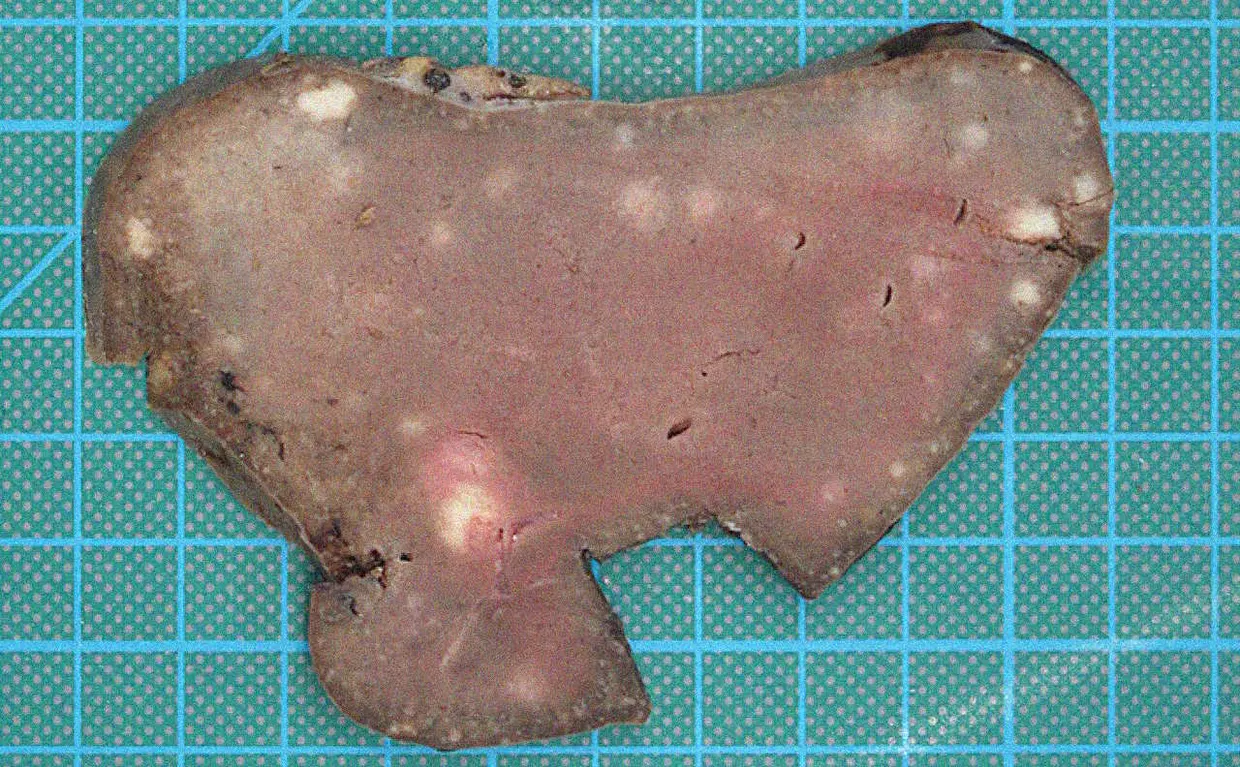
Наука.uanauka.uaOpen source ↗ After the spleen was removed, granulomas were found in it: clusters of immune cells that arise from chronic inflammation and led to the death of part of the organ's cells.
PCR analysis of the tissue showed B. henselae bacteria in it. According to the report, the liver and spleen thus became reservoirs of the pathogen, as often happens in patients with weakened immunity due to HIV or to medication taken after organ transplantation.
The illustrations to the article show a spleen section with whitish formations, the sites of tissue damage by the pathogen, and the cat scratch on the patient's thigh next to MRI images with the lesions of the liver and spleen marked.
Fontes · 1
Encontrou um erro?Leia também