Saccharin, found by accident in 1878 at Johns Hopkins, proved 300 times sweeter than sucrose
Chemist Constantin Fahlberg noticed a sweet taste on his hands in 1878. The compound became the first artificial sweetener and went through a century of safety disputes.
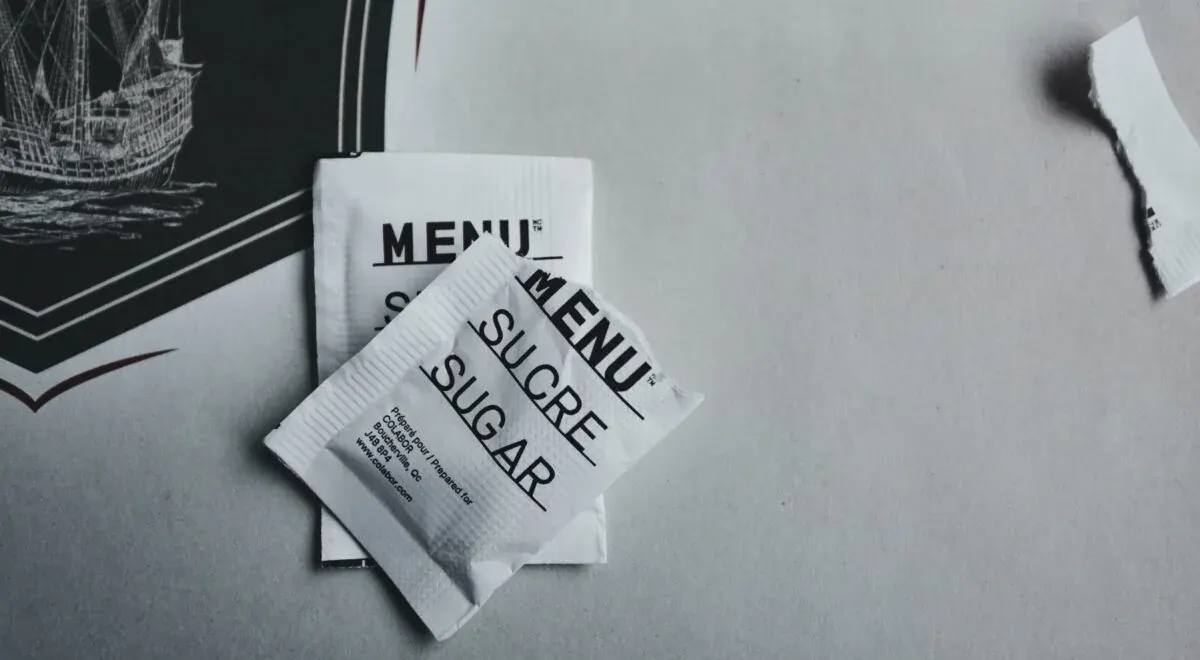
Saccharin, the first artificial sweetener in history, was discovered by accident in June 1878 at Johns Hopkins University in Baltimore, according to science-et-vie.com. The Russian chemist Constantin Fahlberg was returning from the laboratory of Ira Remsen, professor of chemistry, when he bit into a roll with a strangely sweet taste. His fingers carried a compound with a sweetening power about 300 times that of sucrose science-et-vie.com
science-et-vie.comscience-et-vie.comOpen source ↗.
Fahlberg had not washed his hands. He ran back to the laboratory and tasted the contents of each vessel on his bench. The source was a beaker in which several reagents had produced an unexpected compound; nobody had been trying to make a sweetener.
From patent to regulation
Remsen and Fahlberg published a joint article on the substance in February 1879. In 1884 Fahlberg filed patents alone, without telling his colleague. He opened a factory in New York, where one employee produced five kilograms of saccharin per day. Physicians, manufacturers and diabetics soon adopted it.
In 1906 the US Congress passed the Pure Food and Drug Act. Two years later Harvey Wiley, the federal head of food chemistry, sought to ban saccharin, arguing that a coal-tar derivative could not be safe. President Theodore Roosevelt contradicted him and the sweetener stayed on sale; Roosevelt took it daily on his doctor's advice. In 1912 the authorities banned it in processed foods, though it could still be bought in pharmacies. Sugar shortages in both world wars revived consumption. In 1958 the Sweet'N Low brand packed saccharin in small pink sachets sold in restaurants, and diet drinks gained more than 10% of the US soda market between 1963 and 1967 science-et-vie.com
science-et-vie.comscience-et-vie.comOpen source ↗.
Safety dispute and successors
In 1970 researchers at the University of Wisconsin observed more bladder cancers in rats fed saccharin. US health authorities removed it from their safe list in 1972. When the administration tried to ban it in 1977, Congress received more than a million protest letters, and legislators imposed only a warning label.
In 2000 the National Institute of Environmental Health Sciences invalidated the results of the 1970s. The doses given to the rats did not correspond to realistic human consumption, and Congress repealed the labeling requirement. At the height of the controversy in 1979, 44 million Americans consumed saccharin daily, according to the Science History Institute.
The threat of a ban pushed industry to look for alternatives. Aspartame, identified in 1965, reaches 200 times the sweetness of sugar but also drew health debates. Sucralose followed in 1976 at 600 times. Neotame, approved in 2002, exceeds sucrose by a factor of 7,000 to 13,000 science-et-vie.com
science-et-vie.comscience-et-vie.comOpen source ↗.