La Jolla Institute for Immunology launches FITdb, a free database of 43 functional genetics screens
FITdb integrates 43 screens covering 20,696 mouse and 22,293 human genes across 199 immune cell types and states. Researchers can query how gene perturbation affects immune cell function.
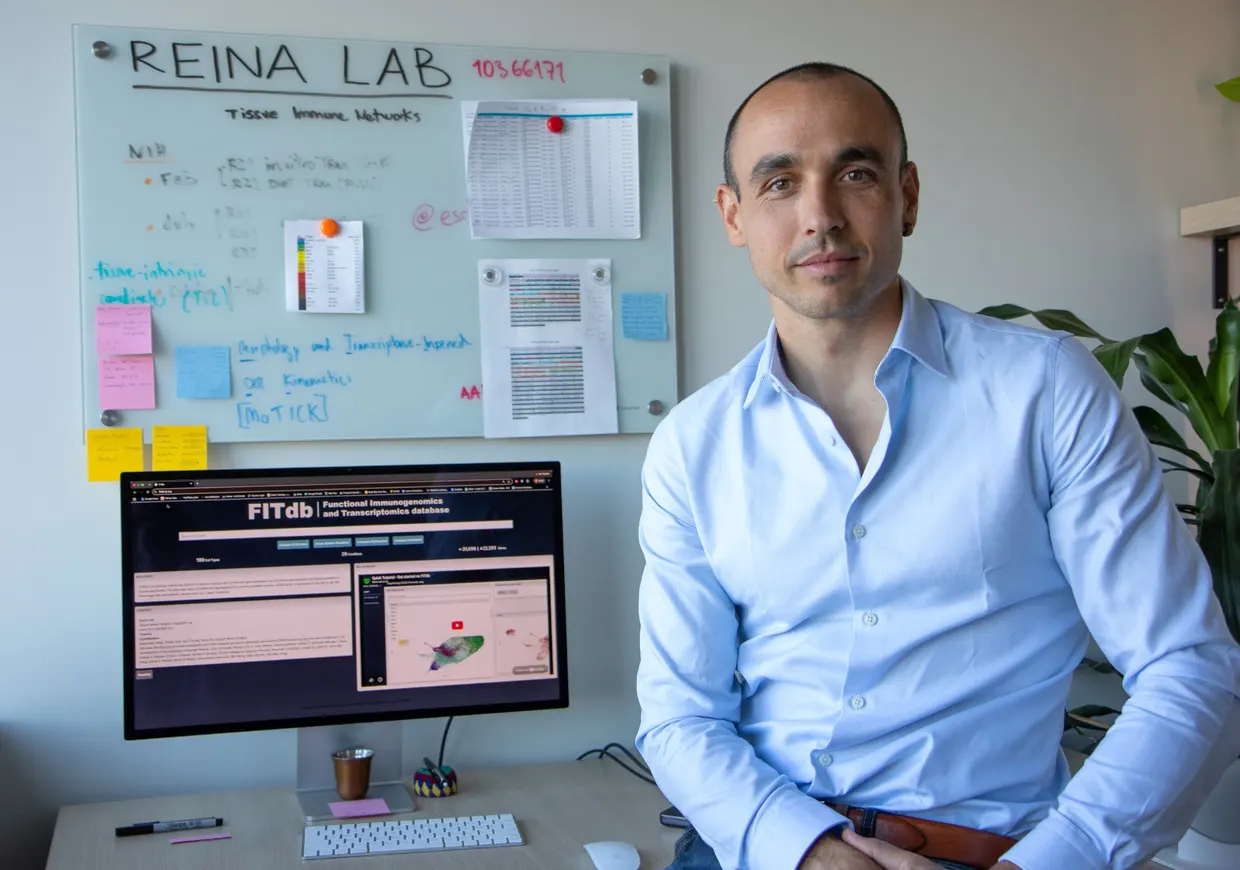
Scientists at La Jolla Institute for Immunology (LJI) in La Jolla, California, have built the Functional Immunogenomics and Transcriptomics database (FITdb), a freely accessible resource that brings together functional genomics datasets for immune cell research, according to newswise.com. The database is directed by LJI Assistant Professor Miguel Reina-Campos, Ph.D. newswise.com
newswise.comnewswise.comOpen source ↗
FITdb currently integrates data from 43 independent functional genetics screens: 31 bulk and 12 single-cell. The screens span 20,696 mouse genes and 22,293 human genes across 199 immune cell types and cell states and 29 conditions. According to Reina-Campos, this removes the need to search hundreds of papers and their supplementary files for such information.
How researchers use the database
A user can enter the name of a gene and see how its functional perturbation affects immune cell function. The reverse approach is also possible: exploring which genes or regulators may be promising targets for manipulating immune cells against cancers or viruses.
The team describes the work in Nucleic Acids Research and highlights two tools. "Compare MyGeneSet" shows overlaps between user-defined gene lists and functional gene sets in FITdb. "Compare MyScreen" lets scientists directly compare their own screening data with existing datasets. newswise.com
newswise.comnewswise.comOpen source ↗ Users can also generate gene-centric visualizations and expand data for individual screens.
In drug development, FITdb can be used to investigate whether candidate drug molecules cause off-target effects in specific immune cell types, the authors note.
Test case: LAT and LAT2 transporters
Researchers in the Reina Lab used FITdb to study the functional effects and genetic regulators of the transporter proteins LAT and LAT2. The database allowed them to examine, compare and visualize data across complementary CRISPR datasets.
By querying FITdb, the team identified several regulators of LAT and LAT2 expression, including two unique inhibitors and two unique promoters. According to the group, this gave a deeper understanding of the factors involved in T cell rest and activation. newswise.com
newswise.comnewswise.comOpen source ↗
Development and use
FITdb was launched with LJI start-up funding to the Reina Lab and with support from the LJI Information Technology Department. Reina-Campos also worked with LJI Full-Stack Developer Kevin Kim to build the database and organize the screening data.
The platform is designed to require no coding and no long tutorial, says Reina-Campos. Over the last calendar year, nearly 10,000 people have visited FITdb.