Flexible temperature–depth sensor from Chinese Academy of Sciences institute tested at 4812.2 m depth
A prototype sensor with a graphene–PDMS element withstood about 50 MPa in deep-sea trials. It is meant for curved and mobile platforms where rigid instruments do not fit.
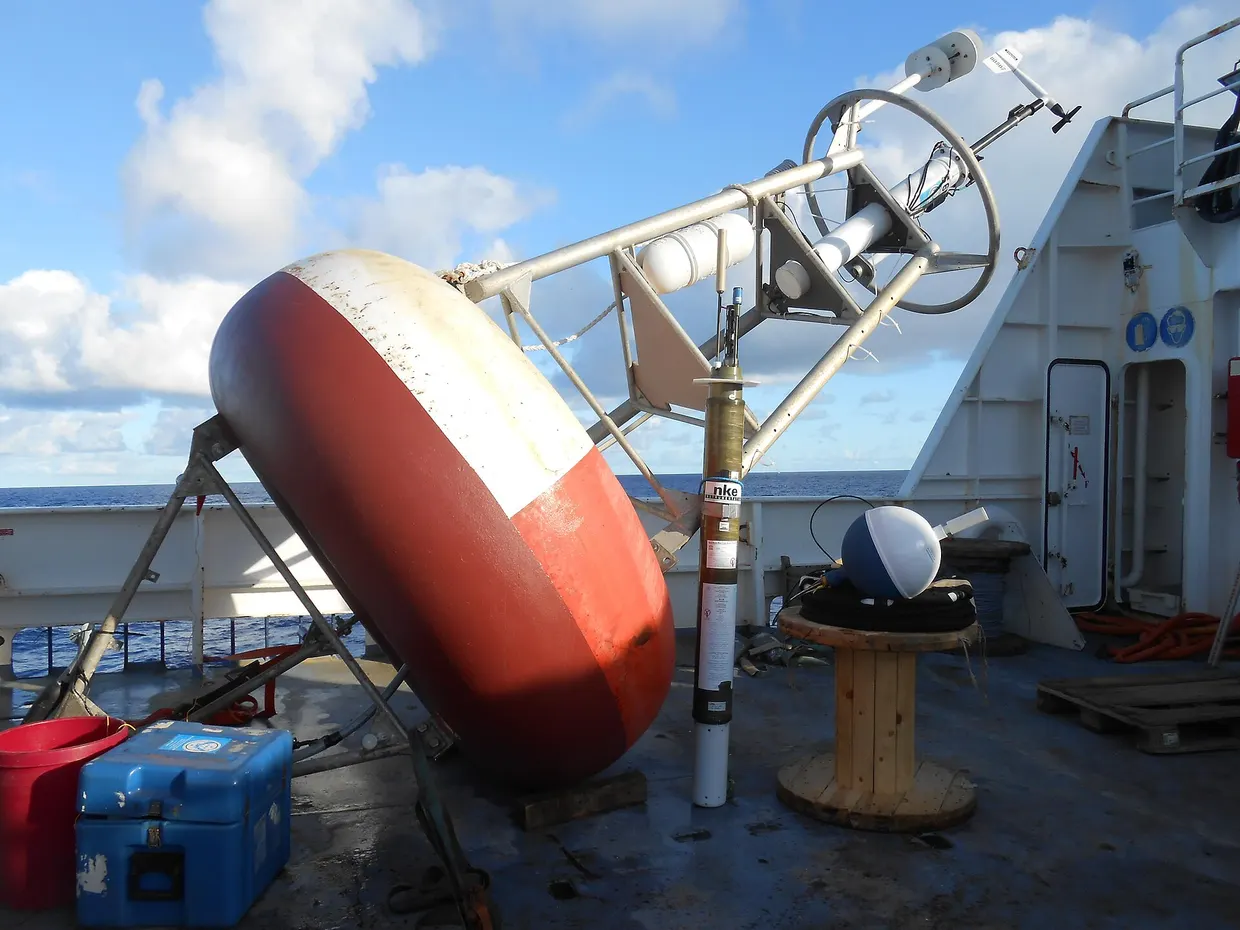
Researchers at the Institute of Deep-sea Science and Engineering, Chinese Academy of Sciences (Sanya), have described a fully integrated flexible temperature–depth sensor in Nature Communications. The device is designed to be mounted on curved and mobile surfaces for deep-sea measurements. In deep-sea trials to 4812.2 m, it kept its structural integrity under about 50 MPa of hydrostatic pressure nature.com
Nature Communicationsnature.comOpen source ↗.
According to the authors, the deep ocean shapes global heat transport, carbon cycling and abyssal circulation, yet large regions remain undersampled. Conventional instruments give precise single-point measurements, but their rigidity and weight limit their use on emerging platforms that could extend observational reach.
Sensing element and electronics
The sensing element is a porous composite of laser-induced graphene and polydimethylsiloxane (PDMS). It covers a measurement range of 0–10 MPa hydrostatic pressure.
The electronics unit is compact, lightweight, stress-adaptive and low-power, with an average quiescent current of 24.63 µA. The authors describe the sensor and electronics as a co-designed cyber–physical platform nature.com
Nature Communicationsnature.comOpen source ↗.
Compensation and accuracy
Temperature–pressure compensation combines a data-driven algorithm with polynomial fitting. With it, the sensor shows a depth error of ≤±0.91% of full scale and a temperature accuracy of ≤±0.29 °C.
The deep-sea trials reached 4812.2 m. The authors report that the structure remained intact under about 50 MPa of hydrostatic pressure, which they take as evidence of durability in extreme environments.
The authors state that the design makes sensing possible on platforms inaccessible to conventional instruments. The work describes a laboratory-built device tested in sea trials, not a commercial product nature.com
Nature Communicationsnature.comOpen source ↗.