Surtsey island, formed in the 1963 eruption off Iceland, has 74 recorded plant species since 1965
Scientists have studied Iceland's Surtsey since 1964 and tracked how plants, birds and minerals colonized new volcanic land. Visits remain tightly restricted.
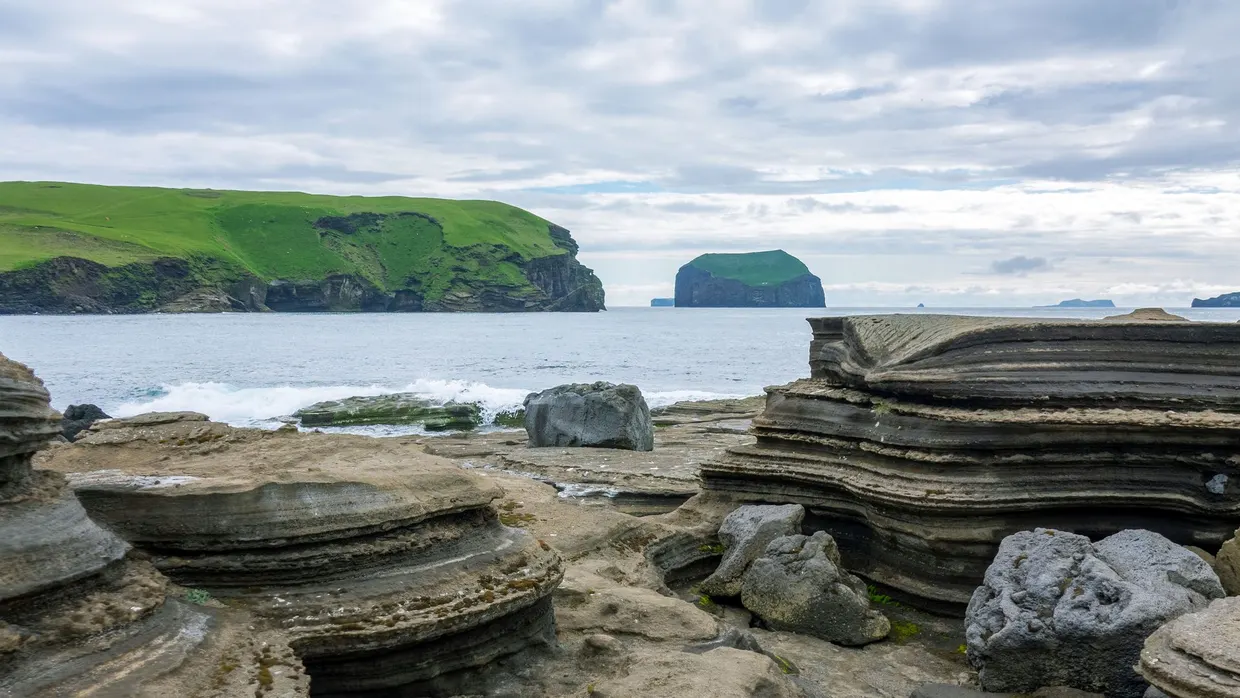
On November 14, 1963, fishermen off the south coast of Iceland noticed signs of an eruption at sea, Earth.com reports. Over the next three and a half years the eruptions built Surtsey, a volcanic island about 20 miles (32 kilometers) from the mainland. The eruption ended on June 5, 1967, and was the longest continuous eruption in Iceland since the country was settled, according to the Environment Agency of Iceland. The new island then covered about 1 square mile (2.6 square kilometers) and rose 558 feet (170 meters) above sea level. earth.com
Earth.comearth.comOpen source ↗
A protected island as a natural laboratory
Surtsey became a nature reserve in 1965, while the eruption was still underway. The reserve was enlarged in 2006 and now covers about 25 square miles (65 square kilometers) of sea and island. Visits have been restricted mainly to prevent biological contamination, and landing requires permission from the Environment Agency of Iceland. Visitors may not bring in organisms or soil, leave waste or dive near the island. According to the IUCN World Heritage Outlook, only one to three visits take place each year, with no more than ten to 12 visitors per trip.
The island is shrinking. By 2006 waves, wind and rain had cut it to about 0.54 square miles (1.4 square kilometers), and its highest point had dropped to 509 feet (155 meters). Measured area fell from 366 acres (148.1 hectares) in 1998 to 317 acres (128.3 hectares) in 2016.
Drill cores taken in 1979 and 2017 show pores in the volcanic rock filling with new mineral cements, including aluminous tobermorite. The work was led by Marie Jackson of the University of Utah. In her account, the only other places with comparable amounts of this mineral are ancient Roman harbor structures, where it formed in concrete. earth.com
Earth.comearth.comOpen source ↗
Plants, birds and invertebrates arrive
The first vascular plant, a sea rocket, was found in 1965. Ten vascular species had arrived by the end of the first decade. By 2004 the count was 60, along with 75 bryophytes, 71 lichens and 24 fungi. Scientists have also recorded 89 bird species, 57 of which breed elsewhere in Iceland, and 335 invertebrate species.
A 2022 study by Sigurður H. Magnússon and colleagues at the Icelandic Institute of Natural History dates the start of a dense gull colony on the southern lava fields to 1986. Plant colonization stalled for six years after 1979, then rose sharply once the gulls settled. The authors attribute this to the birds bringing in more seeds and improving conditions for seedlings.
From 1965 to 2015 botanists counted 74 vascular plant species, 64 of them still living in 2015, about 15 percent of Iceland's native vascular flora. Still, the authors write that most of the island has sparse vegetation cover. No invasive alien species have been recorded so far. IUCN's assessment finalized in October 2025 rated the site's conservation outlook as "Good." earth.com
Earth.comearth.comOpen source ↗