NC State: coyotes persist on 7 Outer Banks islands despite removals, DNA survey finds
Fecal DNA from seven islands gave the first peer-reviewed coyote population estimate for any barrier island: 45–61 animals per season, despite removals.
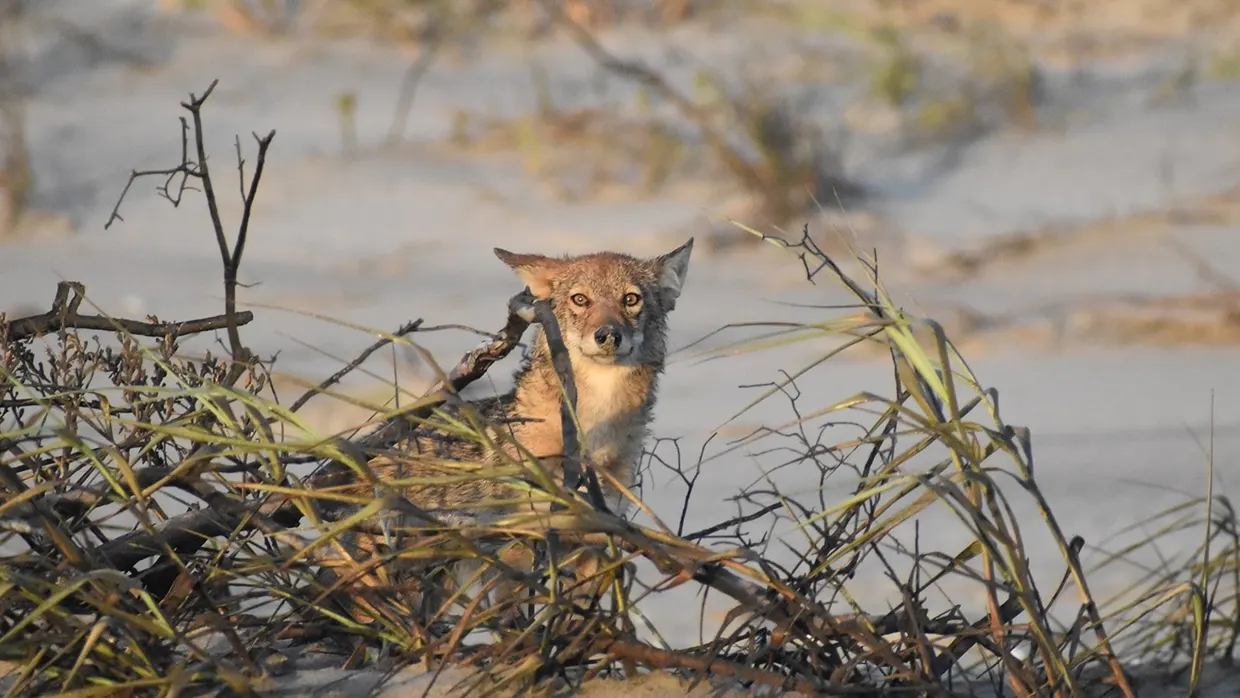
Researchers at North Carolina State University report that coyotes persist on the Outer Banks of North Carolina despite removal programs, according to news.ncsu.edu. The study, published on November 10 in the Journal of Wildlife Management, is the first peer-reviewed estimate of coyote density and population size on any barrier island. Over three seasons (winter 2024, summer 2024 and winter 2025), the team analyzed DNA from fecal samples on seven islands: Bodie, Pea, Hatteras, Ocracoke, North Core, South Core and Shackleford Banks. ncsu.edu
news.ncsu.edunews.ncsu.eduOpen source ↗
The authors collected 383 samples, successfully genotyped 247 and identified 62 individual coyotes (20 males and 42 females). They estimate 45–61 coyotes system-wide per season, with density from 0.04 to 1.01 coyotes/km² depending on the island. Density generally declined as islands became more isolated from the mainland: Bodie Island, which is connected to the mainland, had the highest, and North Core Banks the lowest, followed by Ocracoke.
Removals and population turnover
Coyotes colonized the islands beginning in the late 2000s and depredate nests of protected shorebirds and sea turtles. Federal agencies have removed more than 160 coyotes since 2009, starting at Cape Hatteras National Seashore, then Cape Lookout National Seashore in 2017 and Pea Island National Wildlife Refuge in 2023.
The National Park Service removed 14 coyotes from Bodie and Hatteras in 2024, yet researchers kept detecting coyotes on both islands through the year. New individuals replaced many of those that disappeared. According to the abstract, removals took roughly one third of the standing population in 2024–2025, but were locally concentrated and in some island-years met or exceeded the estimated island population. Mean apparent survival did not differ significantly between managed and unmanaged islands, though the credible intervals were wide. ncsu.edu
news.ncsu.edunews.ncsu.eduOpen source ↗
Genetic structure and management
The analysis found four genetic groups: Hatteras and Pea islands; Bodie Island; and South Core and Shackleford Banks, among others. These groups had low genetic diversity and many closely related animals, which the authors interpret as recent founding by a few mainland coyotes. On Bodie and Hatteras, coyotes formed separate packs in the north and south; the other islands each appeared to hold a single pack. Genetic links to the mainland on Bodie, North Core and Ocracoke suggest occasional immigration.
Lead author Daniel Sossover said coyotes are likely to stay and that managers may need to focus on reducing their impact on nesting species through behavioral deterrents and other strategies, alongside or instead of lethal removal.