PNAS study links carbon in Earth's core to outer Solar System material via Kilauea magma isotopes
Analysis of 48 magma inclusions in olivine found elevated carbon-13 in Kilauea samples. The authors propose that Earth received its carbon in several stages.
Researchers publishing in Proceedings of the National Academy of Sciences analysed 48 tiny inclusions of solidified magma trapped in olivine from volcanic rocks of Kilauea and the island of Oahu in Hawaii, Nauka.ua reports. nauka.ua
Наука.uanauka.uaOpen source ↗ According to the authors, carbon in material originating from Earth's core may have arrived on the planet from the outer regions of the Solar System during its formation. The basis is an unusually high content of the carbon-13 isotope.
What the carbon isotopes showed
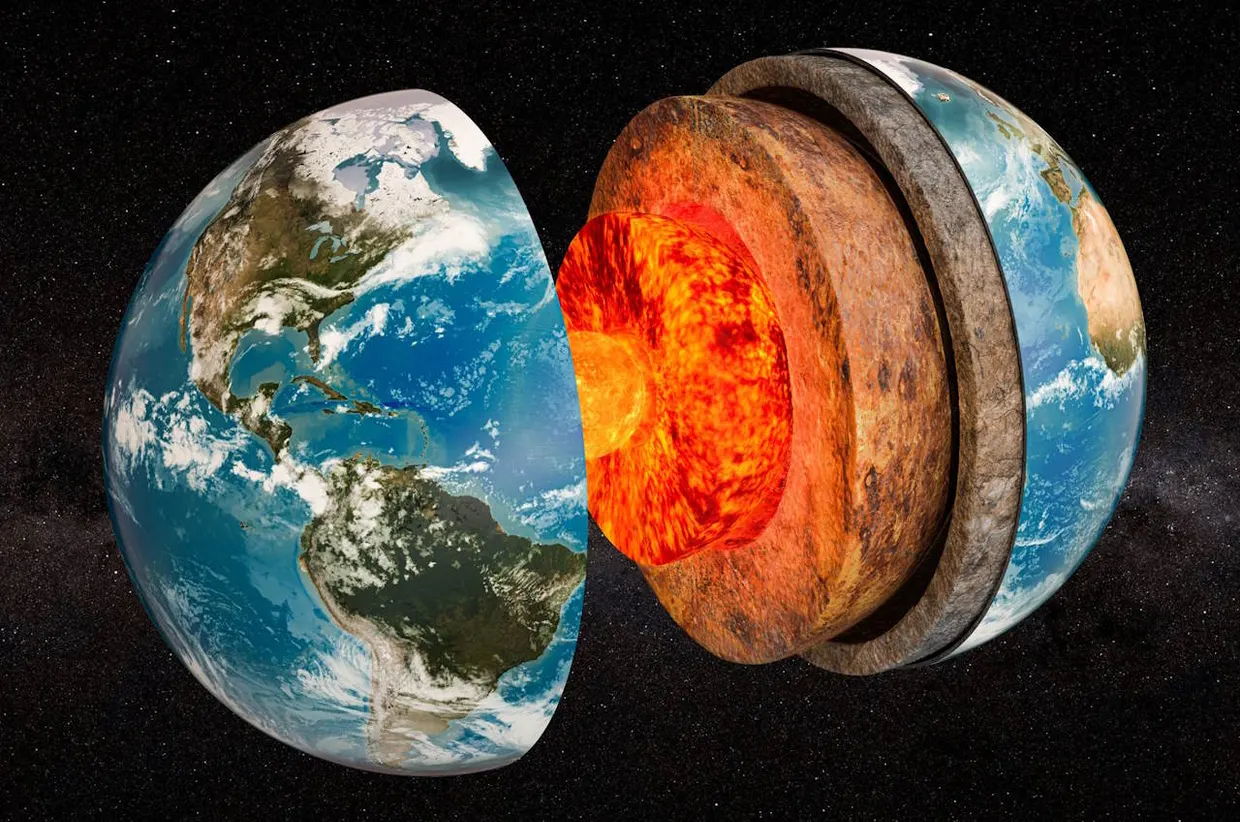
The core cannot be studied directly, so the researchers looked for its traces in material that rises with volcanic magma. The magma source of the Hawaiian volcanoes may lie near the boundary between the mantle and the core. The team compared the ratio of carbon-12 to carbon-13. Kilauea samples contain unusually much of the heavier isotope, while rocks from Oahu have a much lower share that matches values typical of Earth's mantle.
The difference is linked to the origin of the magma. Kilauea probably draws material from the central part of a mantle plume, an ascending flow of hot rock whose source may be near the core-mantle boundary. Oahu samples probably reflect the plume's periphery, where the surrounding mantle dominates.
Meteorites and a formation scenario
The results were compared with the composition of meteorites, mainly carbonaceous chondrites, whose parent bodies formed in remote regions of the early Solar System. The carbon isotope content of some of them agrees with what the researchers assume for the core. Samples of the asteroids Ryugu and Bennu have a similar composition. nauka.ua
Наука.uanauka.uaOpen source ↗
On this basis the authors proposed a scenario. At first the young Earth accumulated mostly material from the inner Solar System, which was poor in carbon because much of the volatile matter had been lost to strong heating. Later the planet received an additional portion of carbon-rich material from distant regions, and part of that carbon could have ended up in the core and remained there. During the collision that formed the Moon, and through later infall of material, extra carbon with a different isotope ratio reached the mantle.
The authors also suggest that the core may be less isolated from the rest of the planet than previously thought. Some carbon may gradually move from the core into the mantle and reach the surface with magma, which could affect the long-term carbon cycle, including carbon dioxide released in large volcanic eruptions. This remains a hypothesis that requires further testing.