Hoxa10 gene maintains skeletal stem cells and bone repair in mice; human cells show similar defects
Deleting Hoxa10 in mice depleted skeletal stem and progenitor cells and impaired bone regeneration; depleting distal Hox genes in human cells gave similar defects.
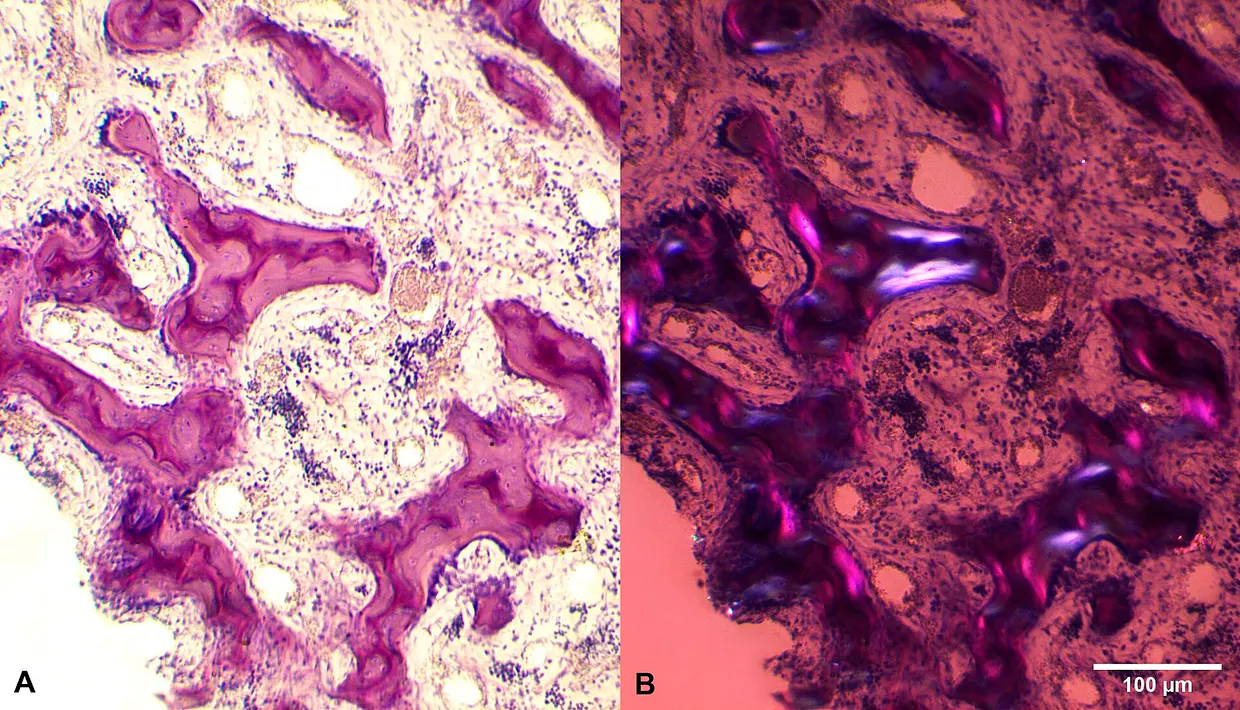
A study in Science Advances identifies the distal Hox gene Hoxa10 as a cell-autonomous regulator of skeletal stem and progenitor cells (SSPCs), which sustain bone homeostasis and regeneration throughout life. The authors used inducible genetic deletion, lineage tracing, single-cell transcriptomics and injury models in mice. science.org
Science Advancesscience.orgOpen source ↗
According to the authors, loss of Hoxa10 led to progressive depletion of SSPCs, impaired bone regeneration and defective matrix organization. Hoxa10 keeps skeletal stem cells in the undifferentiated state by restraining premature osteogenic, adipogenic and chondrogenic commitment.
The gene also promotes collagen III production and collagen fiber alignment within regenerative niches. Its regulation of extracellular matrix composition is restricted to primitive progenitors and is uncoupled from osteoblast differentiation.
In primary human SSPCs, transient depletion of distal Hox genes reproduced the defects seen in mice: changes in proliferation, self-renewal and restraint of differentiation. science.org
Science Advancesscience.orgOpen source ↗ The authors describe a conserved Hox-dependent program that preserves skeletal stem cell identity and regenerative competence. The experiments were performed in mice and in cultured human cells.